
Greenhouse Gas Reduction (Project level)
EGAT Cooling Innovation Fund (CIF)
According to the Concluding Agreement (CA) signed between the Electricity Generating Authority of Thailand (EGAT) and the Deutsche Gesellschaft für Internationale Zusammenarbeit GmbH (GIZ) on November 24, 2020, the agreement was reached regarding the utilization of the remaining fund from the project of Thailand Refrigeration and Air Conditioning Nationally Appropriate Mitigation Action (RAC NAMA). This project focused on enhancing energy efficiency and reducing greenhouse gas emissions in the refrigeration and air conditioning industry. The initiative is referred to as the “EGAT Cooling Innovation Fund (CIF).” The objectives of the CIF are to promote sustainable innovation and drive the refrigeration and air conditioning industry sector (RAC Sector) toward the use of environmentally friendly, energy-efficient technologies that utilize natural refrigerants with low Global Warming Potential (GWP) compared to widely used synthetic refrigerants. The implementation period of the fund is from April 2021 to June 2025.
The CIF has proceeded four potential project categories as follows:
- Training and Education
- Demonstration and Pilots
- Standards and Safety
- Knowledge Management and Communication Training and Education Projects,
The goal and expectations of the projects under the CIF are to reduce greenhouse gas, supporting Thailand’s target to reduce emissions by 2030 (B.E. 2573), align with Nationally Determined Contribution (NDC) that Thailand has pledged to the international commitment.
Objective of the Fund
To promote sustainable innovation and market transformation towards climate-friendly and energy-efficient cooling technologies using natural refrigerants.
Scope of the Fund
- Cooling technologies and refrigerant use
- Alternative cooling technologies, e.g. sorption cooling, solar cooling., etc.
- Special cooling applications, e.g. data center cooling., etc.
- Demand flexibilization, e.g. thermal energy storage, smart grid integration., etc.
- Centralized cooling, e.g. district cooling, cooling networks in industrial estates., etc.
- Business innovation, e.g. ESCO models, energy performance contracting, cooling-as-a-service., etc.
- Life-cycle management, e.g. refrigerant destruction., etc.
Project Activities:
- Research and Development
- Capacity Building
- Technology Transfer and Technical Training
- Technology Deployment: Implementing and integrating technologies into
- practical applications.
- Support for Mass Production
- End-User Engagement and Awareness
- Knowledge Sharing and International Collaboration
Duration
1 April 2021 – 30 June 2025
Potential Projects or Measures for Development and Implementation under the CIF
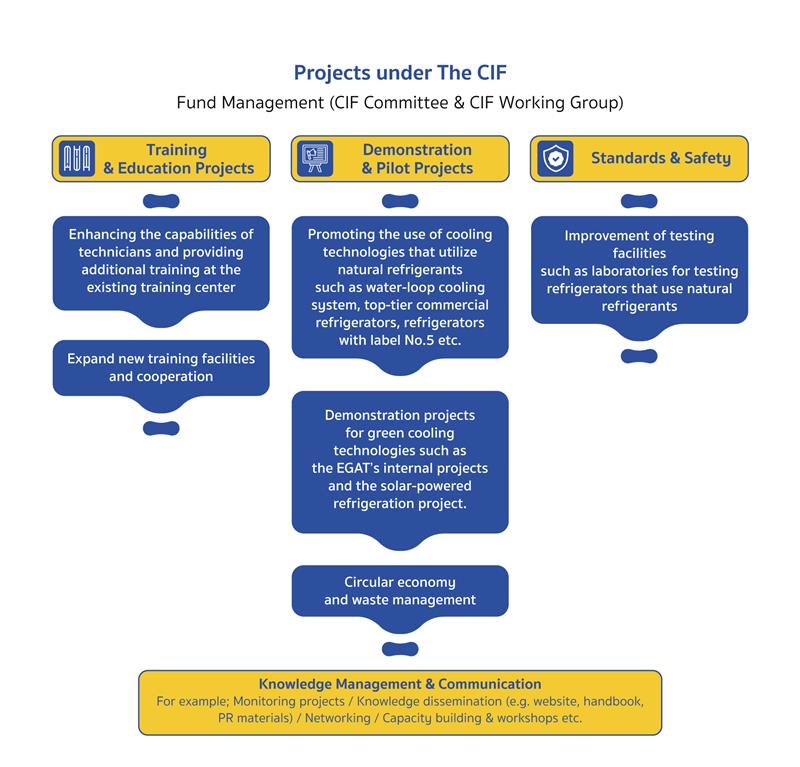
1. Training and Education Projects
1.1 Conducting Training Programs
During the implementation of the RAC NAMA Fund, the program promoted and supported manufacturers in the refrigeration and air conditioning industry to product lines conversion to enable the safe production of products using natural refrigerants. Currently, numerous products utilizing natural refrigerants, such as refrigerators and commercial freezers, have been launched into the market. Additionally, several products are under design and development, including air conditioners, heat pumps, and mini chillers. This project focuses on disseminating knowledge and enhancing the capacity of technicians, educators, production personnel, maintenance technicians, and other related stakeholders. The goal is to familiarize them with new knowledge in safely handling flammable refrigerants. Additional training sessions will be conducted at both existing training centers (those previously supported by the RAC NAMA Fund) and newly established training centers.
The target groups for this initiative include:
- Technicians in the manufacturing and service industries
- Technician teachers from the Department of Skill Development (DSD) to further pass on knowledge to technicians participating in DSD training programs.
- Trainers/Teachers and personnel under the Office of the Vocational Education Commission (OVEC) are to disseminate the knowledge to vocational students.
- EGAT personnel, Interested technicians
1.2. Expansion of Training Centers
Efforts will be made to expand the number of training centers and upgrade existing ones (those previously supported by the RAC NAMA Fund) to ensure that they are equipped with the necessary tools, equipment, and materials for comprehensive training. The target training centers include training centers under the Department of Skill Development (DSD) and technical colleges under the Office of the Vocational Education Commission (OVEC)
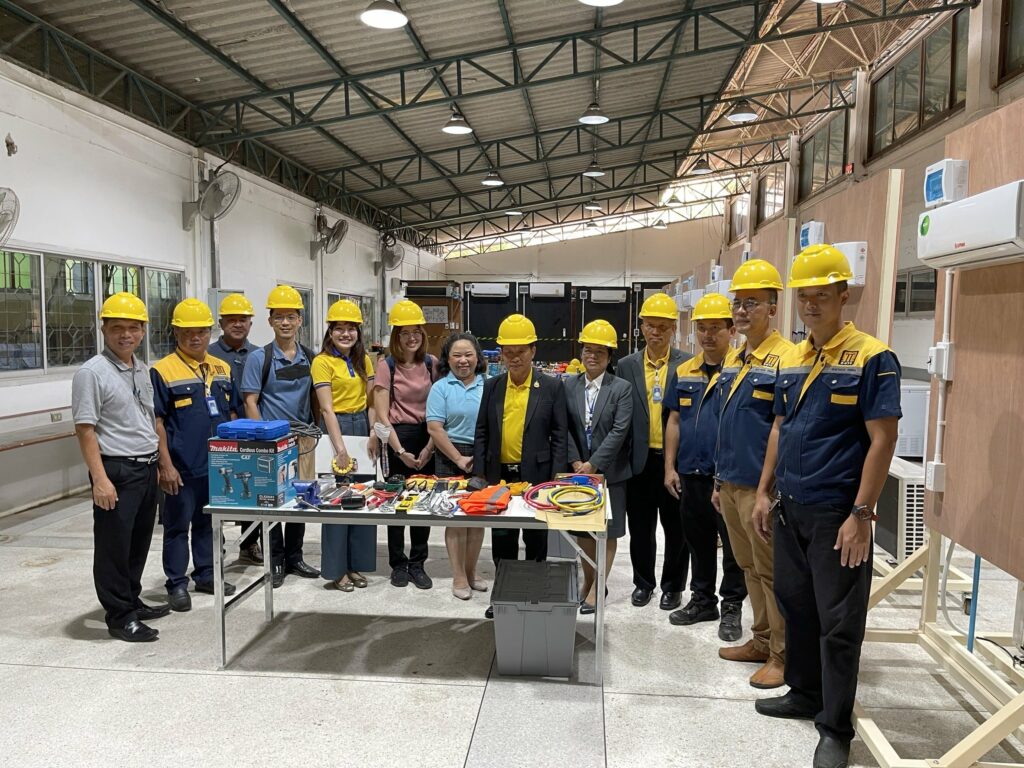
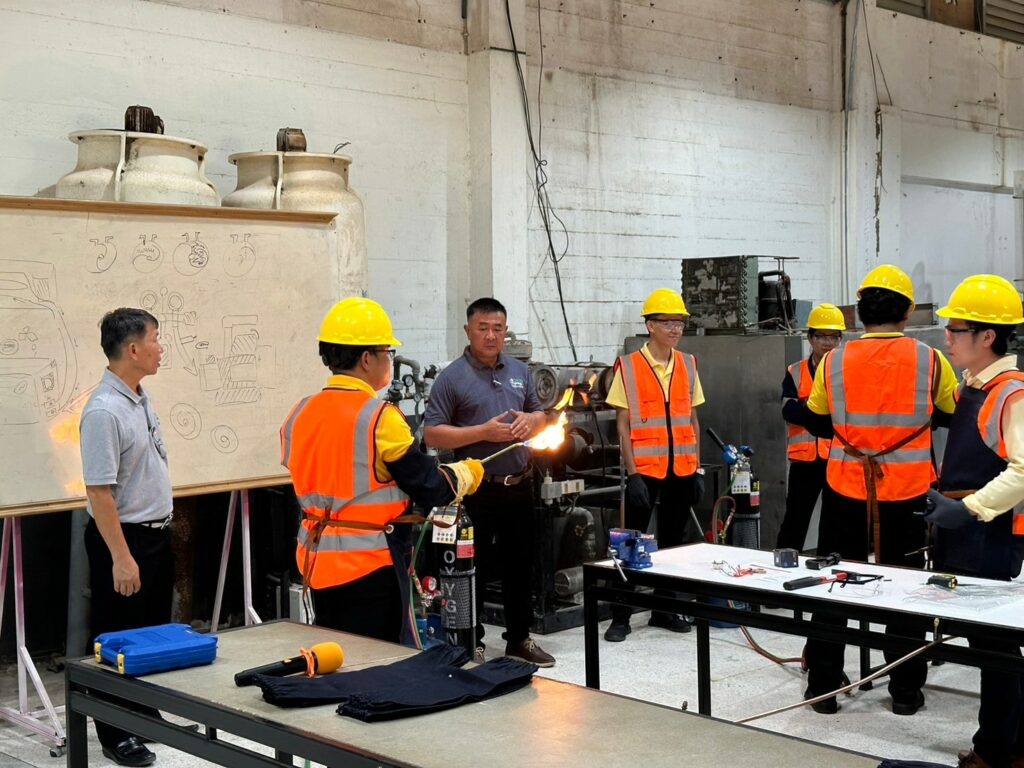
Training program for Safe Handling of Flammable Refrigerants
2. Demonstration and Pilot Technology Projects:
This initiative aims to encourage and support government and private sector organizations, as well as EGAT’s internal units, to conduct studies, research, and implement demonstration and pilot projects featuring innovations for the refrigeration industry. Additionally, it promotes the adaptation of innovative refrigeration technologies from abroad for application in Thailand, such as the implementation of water-loop cooling systems, the use of top-tier commercial refrigerators with natural refrigerants, etc.
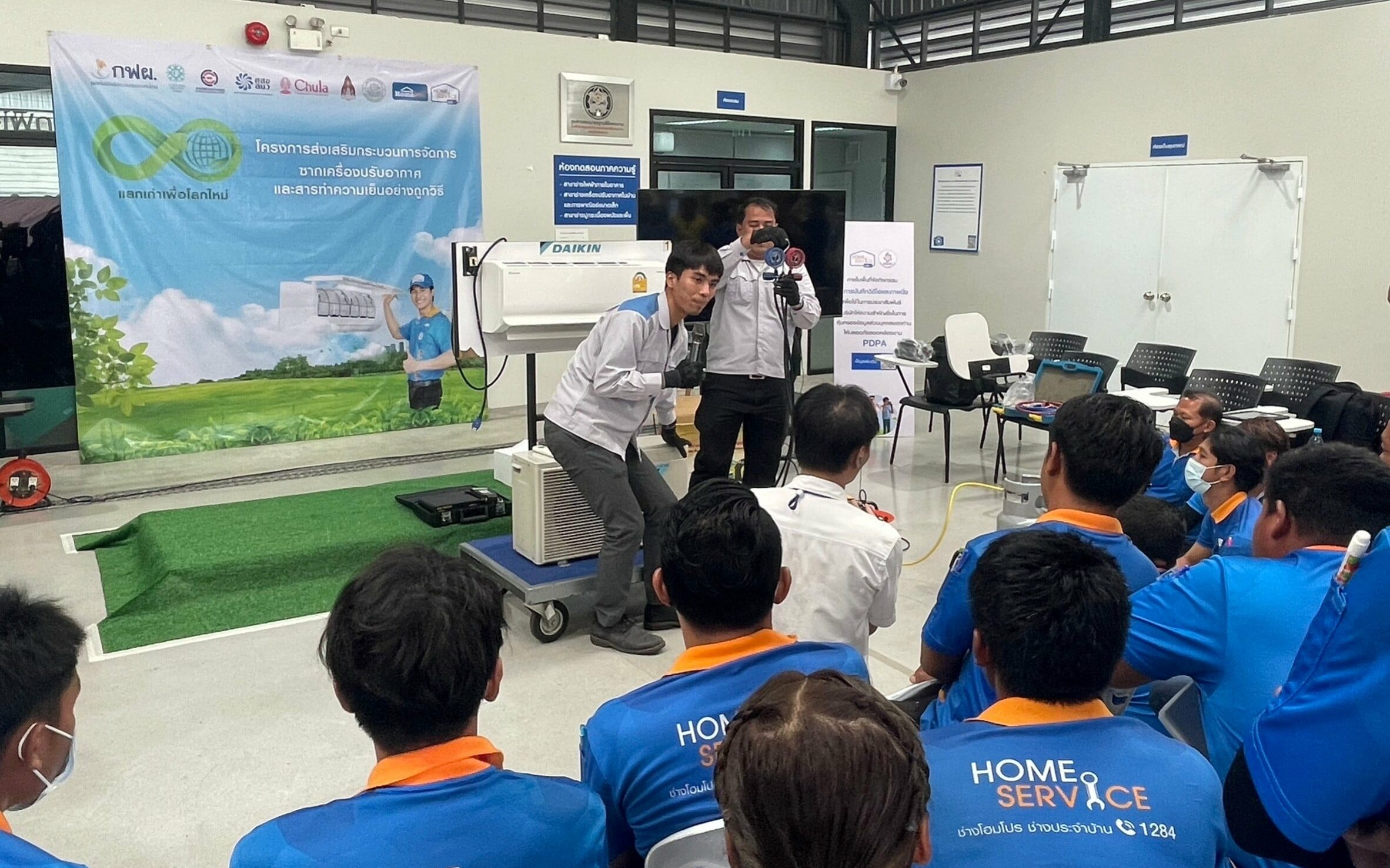
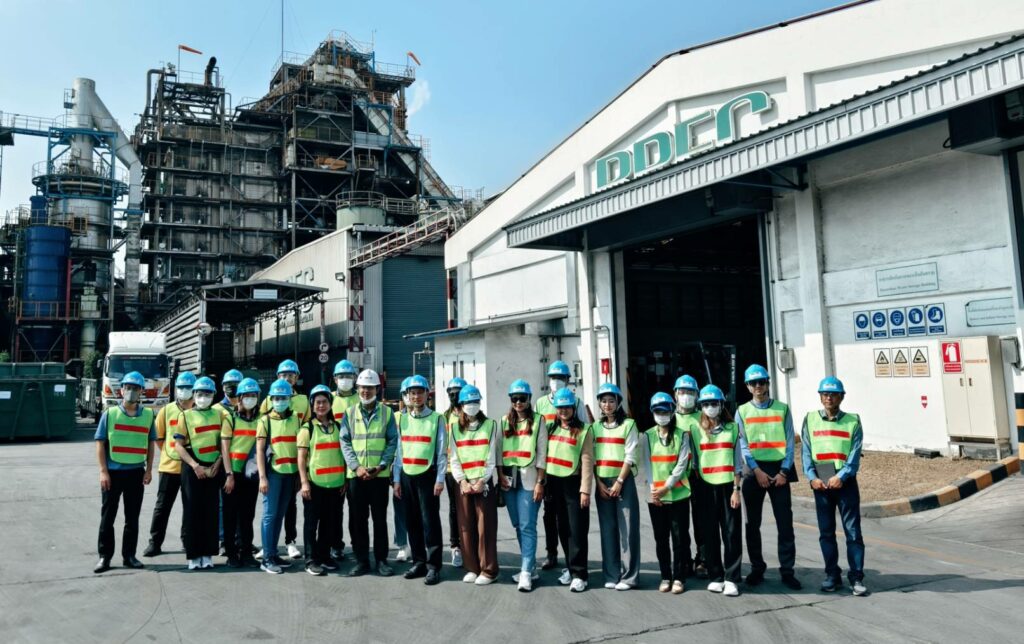
Subsidy Program to Promote Proper Air Condition and Refrigerant Waste Management
3. Standards and Safety Projects
This initiative focuses on supporting research and development in safety and product design, as well as providing facilities for testing products that utilize natural refrigerants, for example. supporting the establishment of product testing facilities at institutions such as the Electrical and Electronics Institute (EEI) to enable the testing of commercial refrigerators using natural refrigerants.
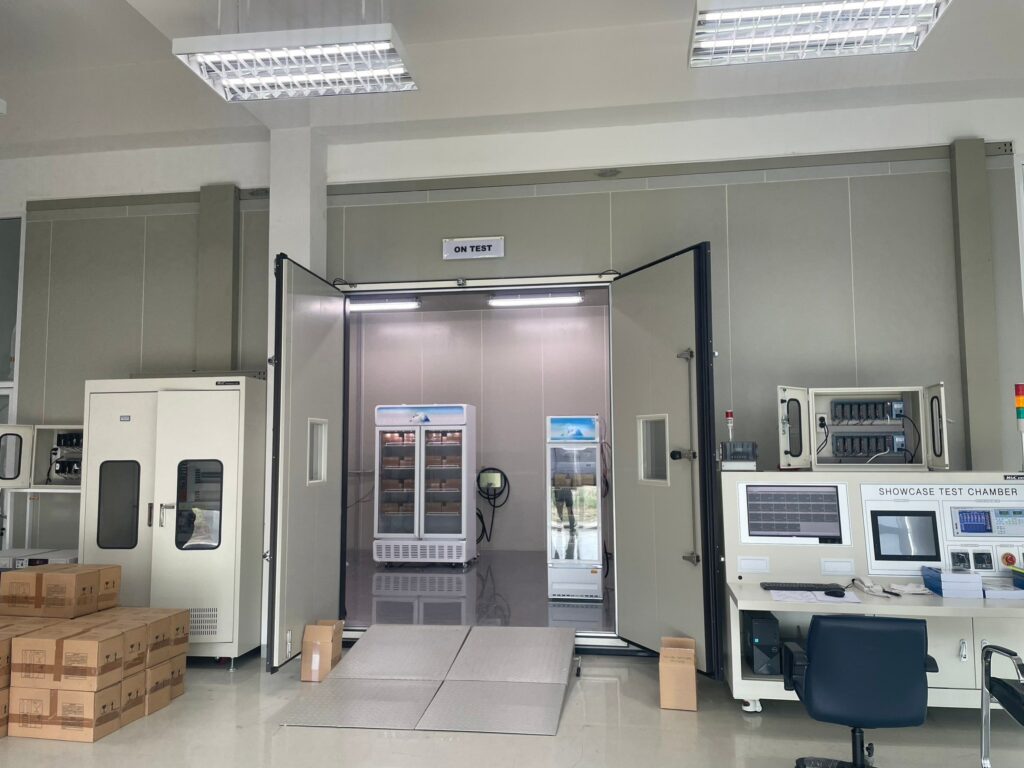
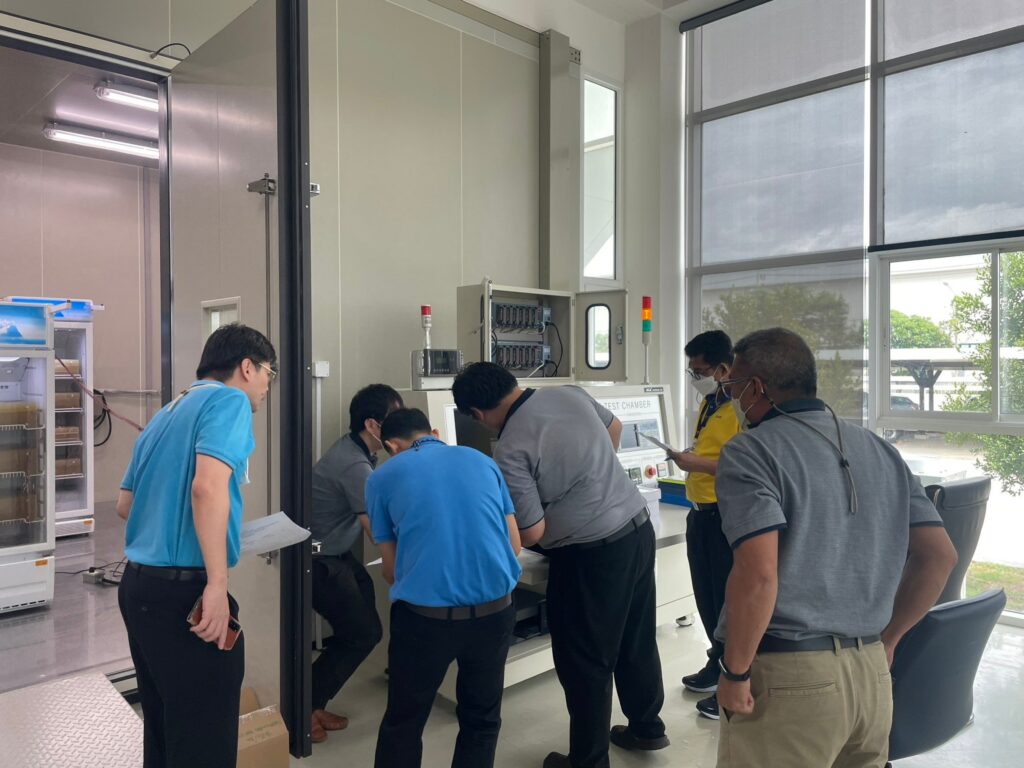
Subsidy Program for Equipment Procurement, Installation, and Facility
Upgrades for Product Testing Laboratory in the Refrigeration Industry
4. Knowledge Management and Communication Projects
This initiative seeks to facilitate the collection and dissemination of information and knowledge from the CIF operations and other sources. The aim is to provide relevant stakeholders and the general public with access to valuable resources. Examples include sharing information via websites, manuals, video clips, and other media.
Thailand Voluntary Emission Reduction Program (T-VER)
Thailand Voluntary Emission Reduction Program (T-VER) is the Greenhouse Gas emission reduction program developed by Thailand Greenhouse Gas Management Organization (TGO) since 2014 to promote and support all sectors to voluntarily participate in the Greenhouse Gas emission reduction program and can sell the reduction unit or carbon credit, which is called “TVER” under this T-VER program, under the voluntary domestic market. In this regard, TGO has prescribed rules and procedures for project development, Greenhouse Gas emission reduction methodology, and certification of emission reduction credit. All projects participated in T-VER program must reduce Greenhouse Gas emission/result in carbon sequestration within Thailand’s jurisdiction.
At present, EGAT has 13 registered projects under T-VER as follows:
| Registration Number | Project Name | Project Type | Expected amount of Greenhouse Gas Emission Reduction (tCO2eq/year) |
| 001 | Naresuan Hydropower Project | Alternative Energy | 21,198 |
| 002 | 2×1.25 MW Lamtakhong Wind Turbine Generators, Thailand | Alternative Energy | 2,351 |
| 067 | EGAT Irrigation Valve Based Micro Hydro Project | Alternative Energy | 6,796 |
| 073 | EGAT Energy Efficiency Improvement for Lighting at High-Voltage Electricity Substation | Energy Efficiency | 807 |
| 087 | Khwae Noi Hydropower Plant | Alternative Energy | 81,643 |
| 088 | Khun Dan Prakarnchon Hydropower Plany | Alternative Energy | 14,756 |
| 117 | 2×12 MW Lantakhong Wind Turbine Generators | Alternative Energy | 21,540 |
| 144 | Kiew Kor Mah Hydropower Plant | Alternative Energy | 18,479 |
| 204 | Kling Tron Hydropower Plant | Alternative Energy | 6,425 |
| 229 | Pha Chuk Hydropower Plant | Alternative Energy | 47,406 |
| 359 | 45 MW Sirindhorn Dam Hydropower Floating Solar | Alternative Energy | 44,590 |
| 380 | Bang Pakong Power Plant (Unit 1-2 replacement) | Energy Efficiency | 511,986 |
| 487 | Hydro-Floating Solar Hybrid at Ubolratana Dam Phase 1 | Alternative Energy | 22,860 |