
Good Governance
Good corporate governance is a fundamental cornerstone for driving the organization toward stable and sustainable growth together with society and all stakeholder groups.
| Target for 2025 | Performance |
| ● Achieve a score of no less than 95 points in the Integrity and Transparency Assessment (ITA) of public sector organizations | ● EGAT achieved an Integrity and Transparency Assessment (ITA) score of 96.61 points |
| ● Ensure that 80% of employees at the level of Assistant Director and equivalent and above receive anti-corruption training | ● 82.42% of employees at the level of Assistant Director and equivalent and above received anti-corruption training |
Policy and Commitment
Governance Structure and Composition
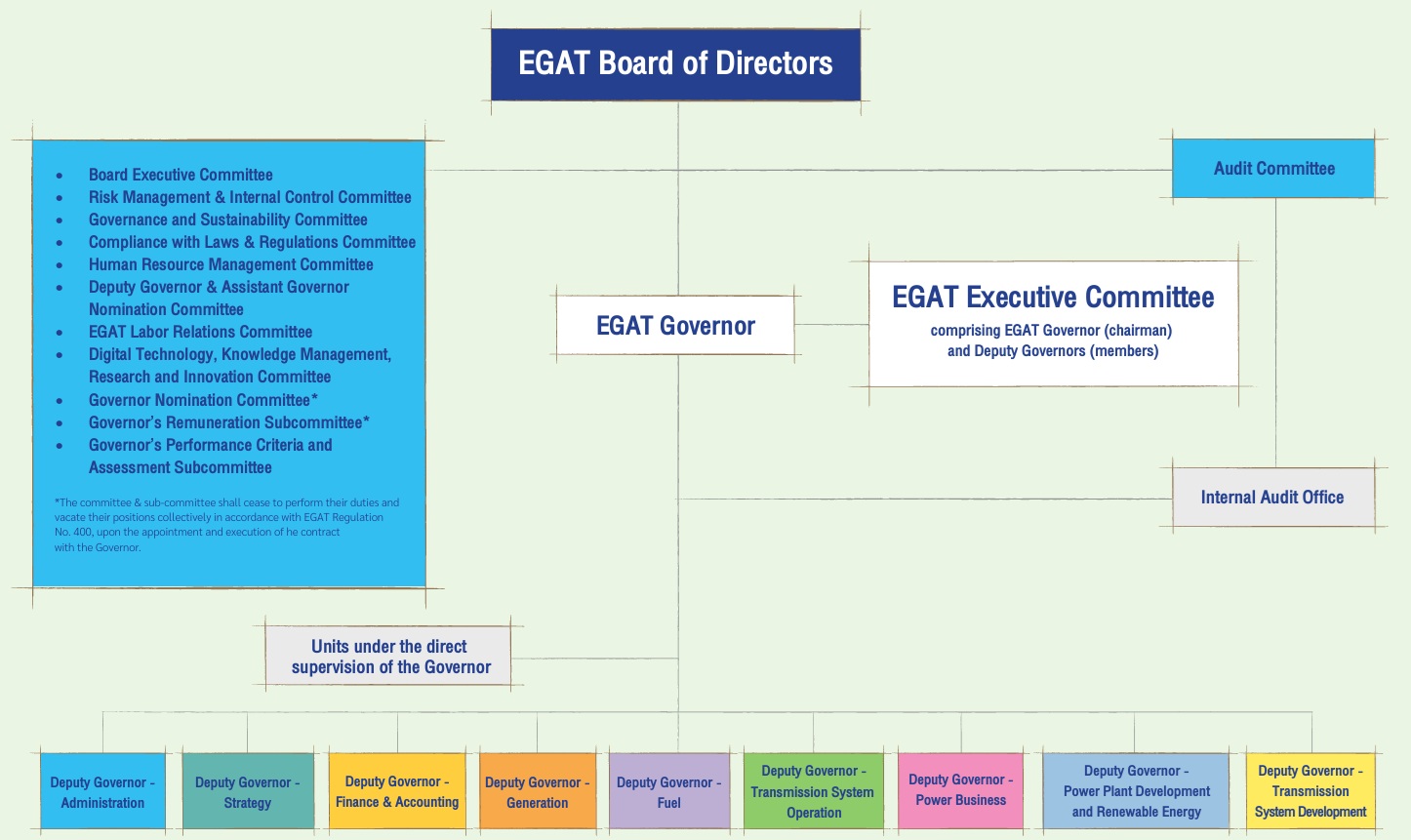
EGAT’s governance structure is transparent and systematic. It comprises the EGAT Board of Directors, which is appointed by the Cabinet and is responsible for formulating policy and overseeing EGAT’s operations to ensure the organization develops sustainably, with due consideration to environmental, social, and governance dimensions and a focus on creating shared value with all stakeholder groups. The Board has also appointed 12 subcommittees to assist in screening and reviewing important matters.
In terms of management, operations are conducted through the EGAT Executive Committee, which consists of the Governor of EGAT, who serves as the highest-ranking executive and chairperson, together with the Deputy Governors as members. This body is responsible for ensuring that EGAT’s operations are managed efficiently and in line with clearly defined objectives.
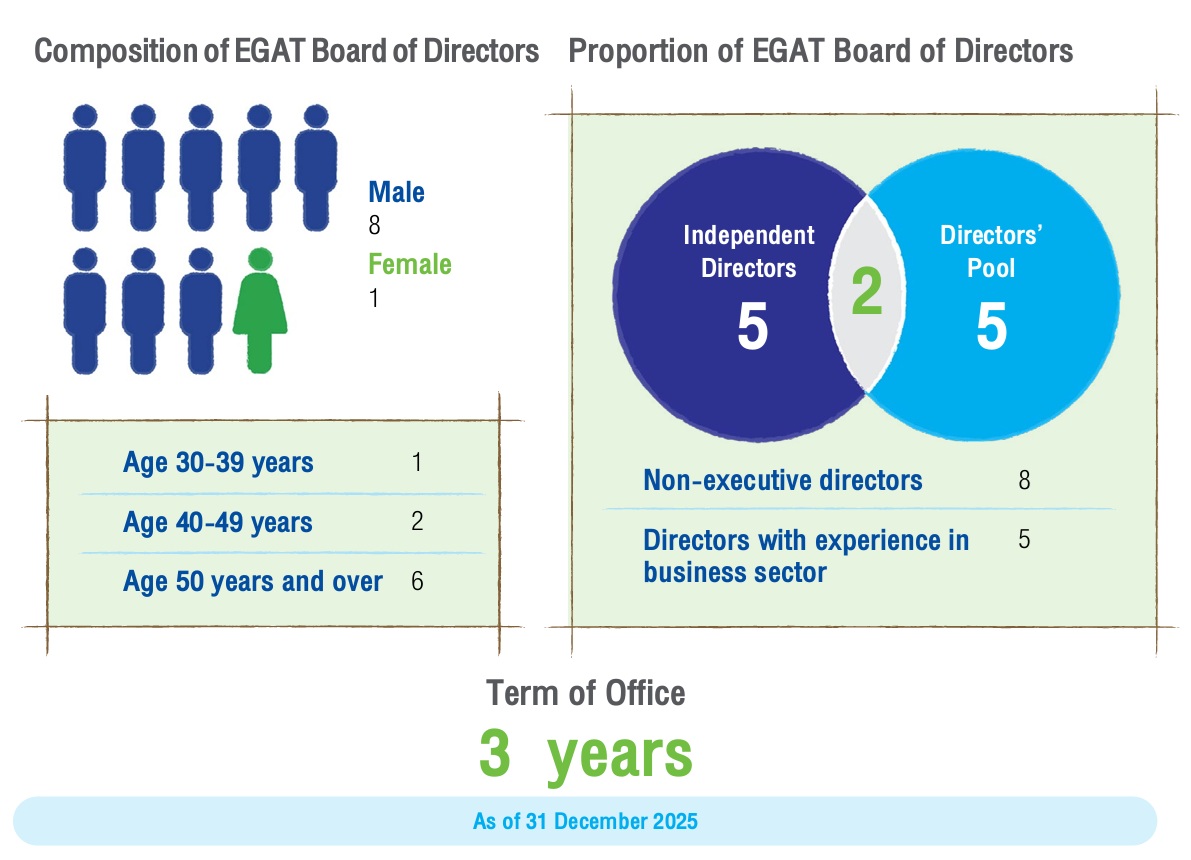
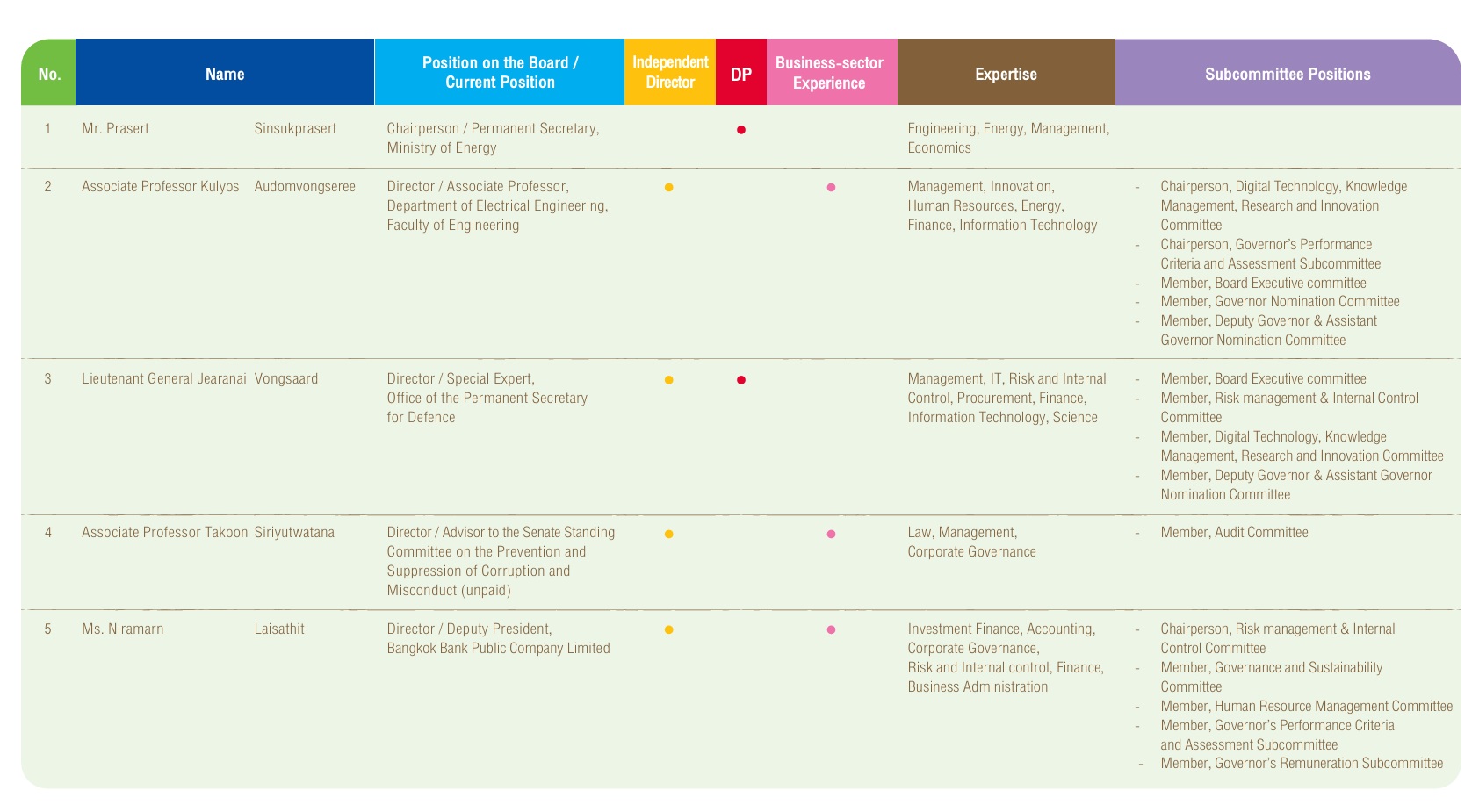
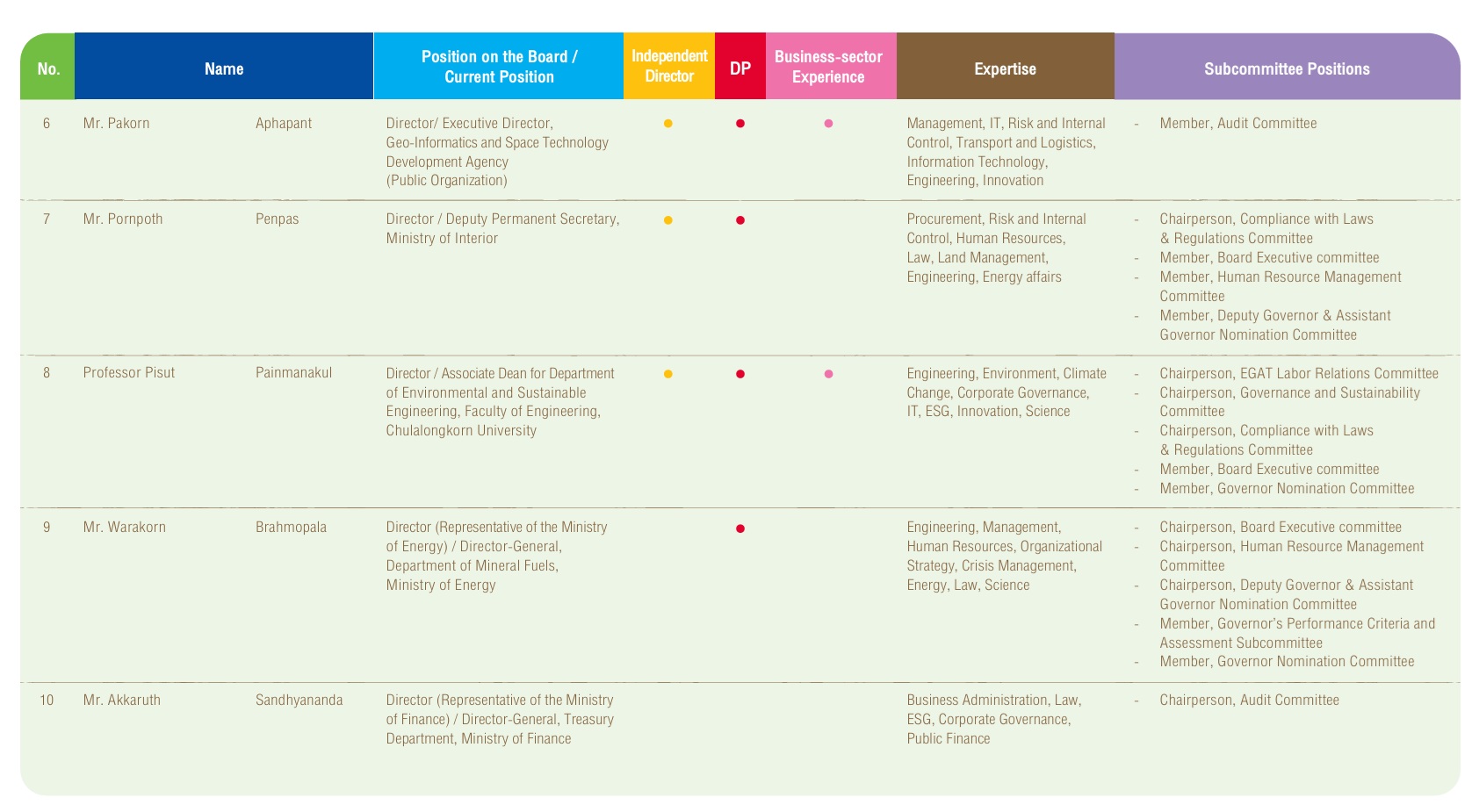
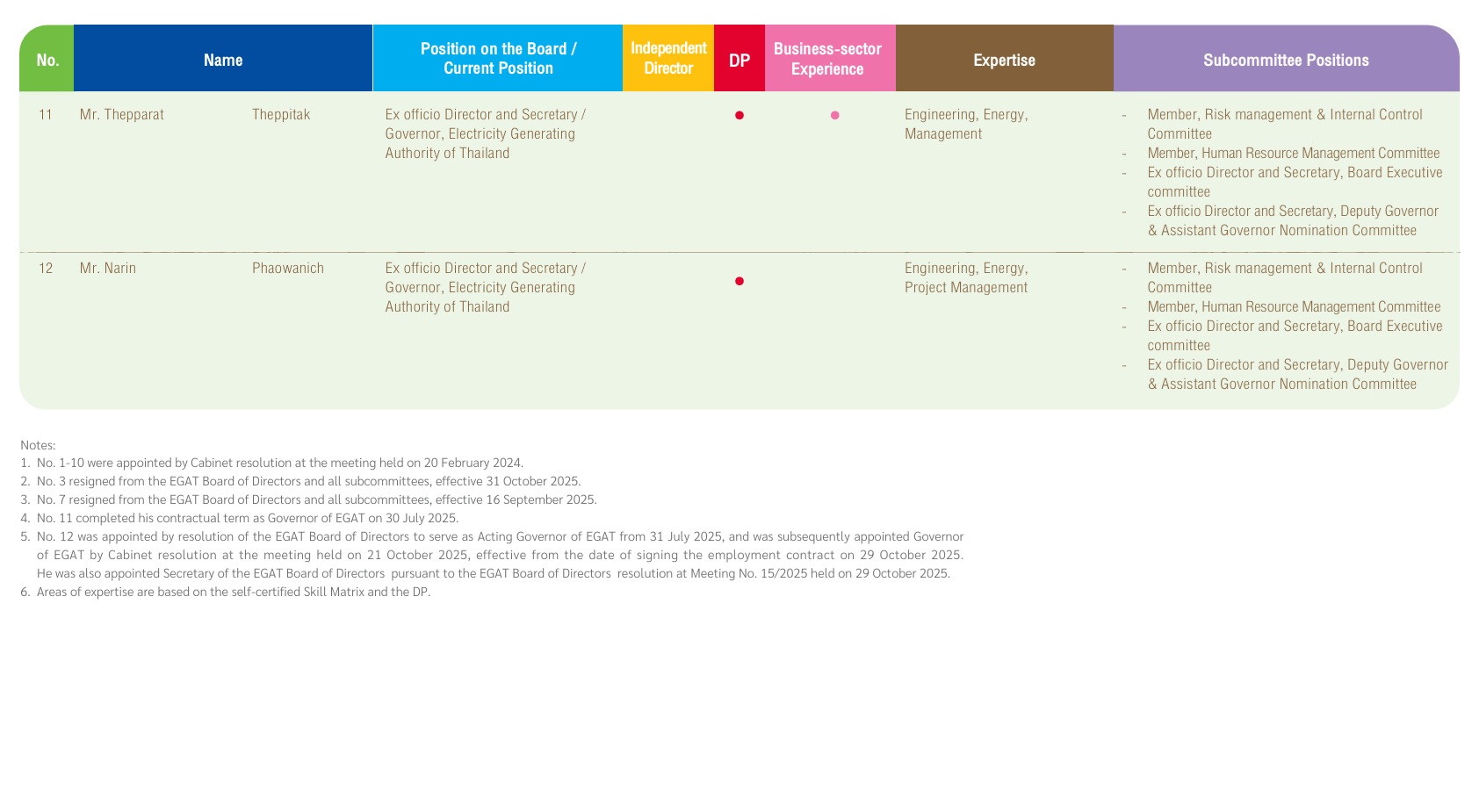
The composition of the EGAT Board of Directors consists of a Chairperson and up to 10 other directors, including the Governor, who serves as an ex officio director. Each term of office is three years. In 2025 (as of 31 December 2025), the Board of Directors consisted of 9 directors, comprising 8 men and 1 woman. The Board included 5 independent directors, of whom 2 were listed in the Directors’ Pool (DP) (from a total of 5 Board members who were in the Directors’ Pool). This is in accordance with the State Enterprise Directors and Employees Qualification Standards Act B.E. 2518 (1975), as amended, and the State Enterprise Policy Committee Notification on Good Corporate Governance in State Enterprises B.E. 2568 (2025). In addition, 5 directors were qualified members with work experience in the business sector, representing not less than one-third of the number of other directors of the state enterprise, in accordance with the resolution of the State Enterprise Policy Committee (SEPO) at Meeting No. 2/2026 held on 25 October 2023.
EGAT Board of Directors
Nomination and Selection of the Board of Directors
EGAT conducts the selection of its Board members in accordance with relevant laws and criteria, including the State Enterprise Governance and Management Development Act B.E. 2562 (2019), the resolution of the State Enterprise Policy Committee (SEPO) at Meeting No. 2/2026 dated 25 October 2023, criteria prescribed by SEPO and the State Enterprise Director Screening Committee, as well as the State Enterprise Policy Committee Notification on Good Corporate Governance in State Enterprises B.E. 2568 (2025). Key considerations include the following:
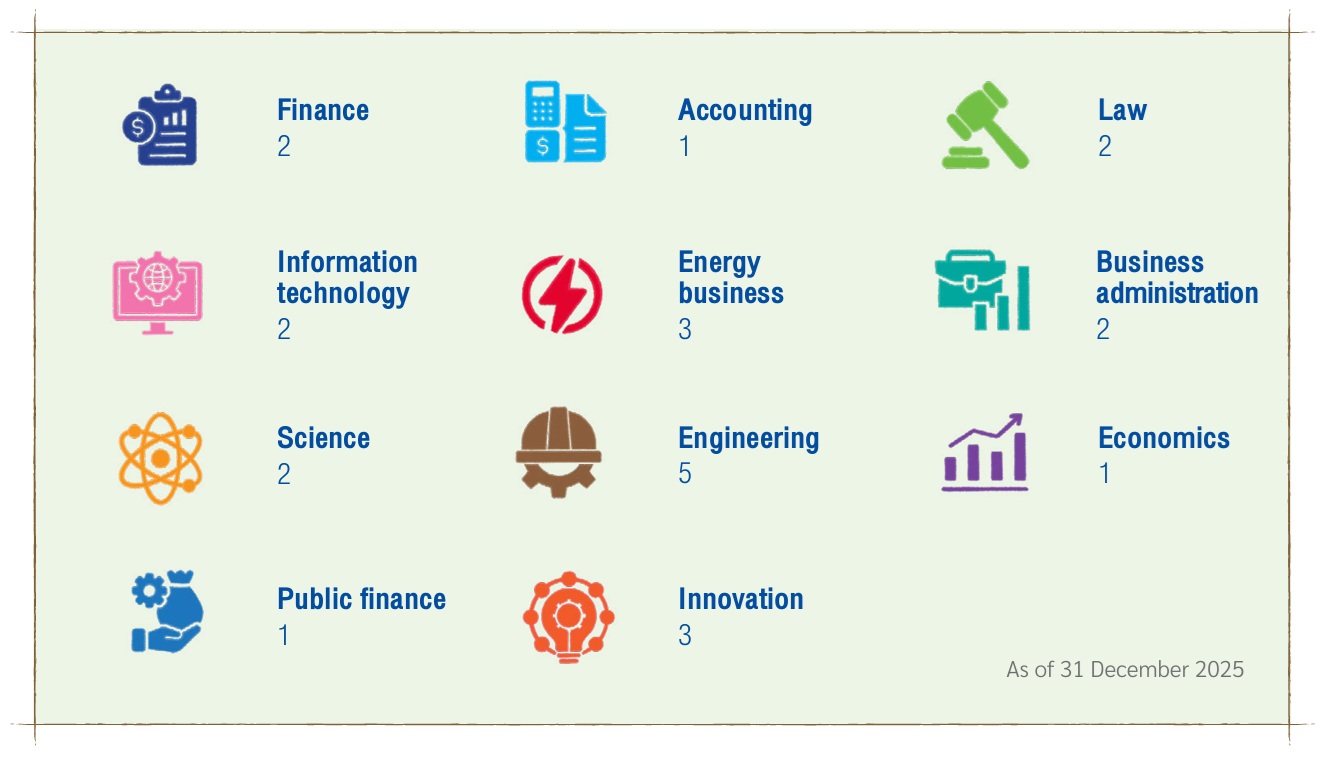
- The Skill Matrix must be used in the selection and appointment of state enterprise directors. EGAT’s Skill Matrix comprises 11 areas: finance, accounting, law, information technology, energy affairs, business administration, science, engineering, economics, public finance, and innovation, in order to ensure that the EGAT Board of Directors has diverse and necessary expertise aligned with EGAT’s supervisory needs, organizational role and mission, founding law, state enterprise development plans, and organizational plans.
- Directors who are qualified members with business-sector work experience must account for not less than one-third of the number of other directors of the state enterprise.
- Directors who are persons listed in the board candidate pool prepared by the Ministry of Finance must account for not less than one-third of the number of other directors of the state enterprise.
- Independent directors, defined as directors who are independent from management, government agencies supervising EGAT, or any person whose influence could impair independent decision-making, must account for at least one-third of the total number of directors. Independent directors must be able to make decisions independently and oversee EGAT’s operations in line with its mission, objectives, and the greatest benefit of stakeholders overall.
- The Board must include one representative of the Ministry of Finance who is a career official of the Ministry of Finance, in order to safeguard the interests of the government as shareholder of the state enterprise. It must also include one representative of EGAT’s supervising ministry (the Ministry of Energy) who is a career official of that ministry, provided such person is not from the ministry’s regulatory unit, so as to link policies from the supervising ministry to the state enterprise.
- A board member may serve on the boards of no more than three state enterprises at any one time.
- A former Governor of EGAT may be proposed for appointment only after having left office for at least two years.
Chairperson of the Board of Directors
The Chairperson of the EGAT Board of Directors serves as the highest authority on the governance side and does not hold any executive position within EGAT, thereby ensuring balance and transparency in operations. In order to strengthen the link between governance and management, the EGAT Board of Directors appoints the highest-ranking executive, EGAT Governor, to serve as Secretary of the EGAT Board of Directors , in accordance with the EGAT regulations on governing meetings and operations of the Board, which authorize the Chairperson, with the Board’s approval, to appoint the Board Secretary.
In addition, the Chairperson of the EGAT Board of Directors does not hold any position on the Board’s subcommittees, in order to preserve the genuine independence of those subcommittees.
Roles of the Board of Directors
Appointment and Delegation of Authority to Subcommittees
The EGAT Board of Directors places importance on sustainable development by appointing a subcommittee with specific responsibility for sustainability oversight. To this end, the Board expanded the duties of the former Governance and Social Responsibility Committee and renamed it the Governance and Sustainability Committee to better reflect its sustainability mandate, effective from 1 January 2025 onward.
Board of Directors quarterly and promptly informs the Board of any changes that may affect EGAT’s operations. Additionally, the committee reviews the effectiveness of relevant policies and considers or proposes amendments to the EGAT Regulations on the Governance and Social Responsibility Committee to the Board at least once a year.
Formulation of the Organization’s Strategic Plan
The EGAT Board of Directors, EGAT management, and the highest-ranking executives of companies within the EGAT Group hold an annual Top Team Meeting (TTM) to jointly review EGAT’s vision, mission, and strategy. This process considers state policy and regulatory directions, stakeholder needs and expectations, sustainability factors, internal and external organizational conditions, and benchmarking data, together with strategic challenges and advantages, manpower, and organizational capabilities in all dimensions. These inputs are used in the preparation of the EGAT Enterprise Plan, which serves as the framework for the organization’s operations. Strategies and operational approaches are also reviewed whenever there are significant changes in external factors that materially affect EGAT.
At the TTM held on 4–5 July 2025, the EGAT Board of Directors provided views and recommendations on sustainable development for management to incorporate into the EGAT Enterprise Plan, as follows:
- Environment and decarbonization: Further reduce Scope 1 and Scope 2 carbon dioxide emissions; promote the use of Carbon Capture Utilization and Storage (CCUS) technology for low-carbon power generation; develop carbon offset models from energy efficiency activities; promote green energy; and seek business opportunities in renewable energy
- Proactive environmental role: Consider expanding EGAT’s role as an environmental advisor to the business sector, particularly in the context of the forthcoming Climate Change Act
- Sustainable infrastructure development: Consider additional large-scale alternative energy sources beyond solar and wind; develop Battery Energy Storage Systems (BESS) to enhance the reliability and sustainability of the power system; and advance Small Modular Reactor (SMR) projects as part of the new national Power Development Plan (PDP)
- Creating shared value with society: Explore business opportunities that create shared value with communities and society, and promote operations that generate positive impacts on society and the environment
Stakeholder Oversight
The EGAT Board of Directors approved the Stakeholder Management Master Plan 2025–2029 and the related stakeholder action plan. In addition, the Board consulted and maintained relations with government agencies to ensure effective management of EGAT’s operations in various areas. Overall engagement with other stakeholders is the responsibility of the line under the Deputy Governor – Strategy, which implements the stakeholder action plan and reports progress to the Governance and Sustainability Committee for consideration and quarterly reporting to the EGAT Board of Directors.
Performance Monitoring
With respect to reviewing and monitoring the effectiveness of impact management processes across economic, social, and environmental dimensions, the Governance and Sustainability Committee is responsible for oversight, monitoring, and quarterly reporting to the EGAT Board of Directors. Any changes that materially affect EGAT’s operations are reported to the Board immediately. The Committee also reviews the effectiveness of relevant policies and reviews or proposes amendments to EGAT regulations governing the Governance and Sustainability Committee at least once a year.
Conflict of Interest
EGAT places importance on preventing conflicts of interest and has established the following regulations, policies, and practices:
- The EGAT Board of Directors is assigned the duty to monitor and address any conflicts of interest that may arise between members of the Board, management, and EGAT personnel, and to review any improper use of EGAT assets.
- EGAT has established a Regulator Rights Management Policy and Guidelines, covering issues such as prevention of insider information misuse, prevention of conflicts of interest, and related-party transaction practices.
- The EGAT Board of Directors, the Governor, and Deputy Governors are required to avoid entering into related-party transactions that may give rise to conflicts of interest, and to report such transactions at the end of every calendar year, or during the year upon appointment, assumption of office, or changes in information. The Internal Audit Office reviews related-party transactions and transactions that may involve conflicts of interest and reports to the Audit Committee for consideration and to the EGAT Board of Directors for acknowledgement within the first quarter of the following year.
- The Audit Committee is required to review related-party transactions or transactions that may involve conflicts of interest or present opportunities for fraud that could affect EGAT’s operations.
- At meetings, if a Board member considers that he or she may have a conflict between personal interest and the public interest in any matter, such member must notify the Chairperson of the meeting or his/her immediate superior (as applicable), so that consideration can be given to requiring the individual to leave the meeting room, prohibiting attendance, restricting access to meeting materials for that agenda item, or allowing attendance without participation in discussion, expression of views, consideration, or decision-making. Such matters must be reported using Conflict of Interest Disclosure Form within 15 days from the date the conflict arises. The Office of the Corporate Secretary compiles the original and sends it to the Compliance Division, while a copy is submitted to the Internal Audit Office within 7 days from receipt of the report, and subsequently reported to the Audit Committee within the next quarter.
- Bid evaluation committees and procurement committees are required to examine the details of all bidders to determine whether there is collusion, restriction of fair price competition, or involvement by members of the EGAT Board of Directors, the Executive Committee, or EGAT personnel in the business of the bidders.
- The EGAT Board of Directors revised the regulation relevant to the recruitment of the Assistant Governor – Internal Audit Office in order to ensure appropriate operations, preserve the independence of the unit, avoid conflicts of interest in audited activities, and ensure freedom from interference in audit execution and reporting of audit opinions on management, in accordance with the Ministry of Finance’s standards and guidelines for internal auditing in government agencies and ethical standards in business conduct.
Communication of Critical Concerns
Where significant concerns arise, the responsible business unit submits the matter to the EGAT Executive Committee for consideration before it is escalated to the relevant subcommittees of the EGAT Board of Directors and, as appropriate, to the EGAT Board of Directors for consideration or acknowledgement.
In cases of force majeure or incidents that may seriously affect society and the nation, the EGAT Governor communicates the incident and EGAT’s response to the Board of Directors immediately.
During 2025, the following critical concerns were communicated through meetings of the EGAT Board of Directors:
- An order from the Minister of Energy to suspend the coal excavation and transport outsourcing process (Contract 8/1) pending completion of factual and legal review. According to the findings of the fact-finding committee, EGAT was not at fault. Nevertheless, the suspension could have led to insufficient coal supply, reduced generation at the Mae Moh Power Plant, and increased use of higher-cost LNG, thereby affecting electricity costs and the public. EGAT therefore proposed mitigation measures.
- The cancellation of the bidding process to replace Units 8–9 due to the absence of bidders. To avoid impacts on the generation capacity of the Mae Moh Power Plant, EGAT proposed management measures to maintain power system stability in the northern region and reduce the impact of higher electricity costs on the public.
- The collapse of the western overburden disposal area of the Mae Moh Mine, caused by continuous rainfall in the area, which could affect mining operations. EGAT reported the situation and both short- and long-term corrective measures to the Board.
In addition, EGAT may report concerns on a quarterly basis through the Enterprise Performance Management (EPM) system, through which the EGAT Board of Directors may provide comments and recommendations.
Knowledge Enhancement for the Board of Directors
EGAT promotes the annual development of knowledge among Board members through training courses and seminars organized by various institutions, as well as other activities designed to enhance the Board’s understanding. In 2025, the EGAT Board of Directors participated in the following knowledge enhancement activities:
- An Introduction Program for newly appointed EGAT Board of Directors members in 2025, held on 10 November 2025, together with the distribution of the EGAT Operations Handbook, which contains key legal and regulatory information necessary for Board duties
- A study visit on clean energy and new electricity management systems in the Kingdom of Norway, during 8–15 March 2025, to enhance governance knowledge in line with the EGAT Enterprise Plan 2025–2029, particularly under the strategic objective T: Transition to Future Energy Solutions, and to strengthen understanding of net zero emissions and green energy businesses
- Site visits for newly appointed directors (including the Governor of EGAT) to the Mae Moh Mine on 5 November 2025 and to the Sirikit Dam Hydropower Plant Unit 4 refurbishment project on 7 November 2025
- Participation in the “2025 Seminar for State Enterprise Directors, Ministry of Finance Representatives, and Chief Executives of State Enterprises”, held on 30 January 2025, to receive policy directions, concepts, and approaches for driving state enterprises toward international standards and to disseminate the revised Corporate Governance Guidelines (CG Guideline) for application by all state enterprises within 2025, with emphasis on sustainability and resilience
Performance Evaluation of the Board of Directors
EGAT requires the Board to conduct an annual self-assessment, in accordance with the good governance principles and guidelines for state enterprises issued by the State Enterprise Policy Office (SEPO), which require state enterprise boards to conduct self-assessment at least once a year.
In 2025, the EGAT Board of Directors conducted self-assessments in three formats: Collective Board assessment, Individual assessment and Cross-assessment
The assessment forms included questions covering the role of the EGAT Board of Directors in overseeing the organization’s impacts in terms of the economy, environment, and people. The results of all three-assessment formats were rated at the “excellent effectiveness” level.
The EGAT Board of Directors then discussed the assessment results together and used the discussion outcomes as one of the inputs in preparing the 2026 Board Corporate Governance Improvement Plan, which was approved as a guideline for improving various aspects of the Board’s performance and increasing its efficiency and effectiveness.
Remuneration Policy
Remuneration of the EGAT Board of Directors consists of a monthly retainer and meeting allowances. EGAT complies with the practice guidelines for state enterprise directors issued by the State Enterprise Policy Office, Ministry of Finance, concerning directors’ fees for state enterprises, pursuant to the Cabinet resolution dated 24 April 2019, which provides that directors of large state enterprises shall receive a monthly retainer of not more than 10,000 baht per month, while the Chairperson shall receive 20,000 baht per month, prorated according to the term of office.
Directors are entitled to meeting allowances only in months when meetings are held, not exceeding 20,000 baht per month, while the Chairperson may receive meeting allowances not exceeding 25,000 baht per month. Where justified, more than one meeting allowance payment per month may be considered, provided that the total does not exceed 15 times per year. If any director is appointed to more than one committee, such director may receive meeting allowances for up to two committees, at no more than one meeting per committee per month. Directors are responsible for paying their own income tax.
For senior executives, remuneration consists of:
- Remuneration of the highest-ranking executive (the Governor): A Governor’s Remuneration Subcommittee is appointed to determine the Governor’s salary and other remuneration, establish criteria and payment guidelines, prepare the draft employment contract, negotiate salary and other benefits, and submit recommendations to the EGAT Board of Directors for consideration. A Governor’s Performance Criteria and Assessment Subcommittee is also appointed to review the Governor’s work plan and performance indicators under the employment contract and to review the performance evaluation before submission to the EGAT Board of Directors .
- Remuneration of senior executives at Division Director level and equivalent and above: These executives are remunerated according to EGAT’s salary structure and receive a uniform fixed bonus rate across the organization, depending on the enterprise’s financial and operational performance in accordance with Ministry of Finance criteria.
The EGAT Board of Directors is responsible for establishing policies and overseeing management so that operations achieve the goals of the enterprise plan, which covers economic, environmental, and people dimensions. These are cascaded into master plans and action plans systematically linked to remuneration and incentives for the Board and senior executives.
With regard to retirement-related benefits, Board members do not receive retirement recognition payment. Senior executives, however, receive retirement recognition payment in accordance with years of service, under the same legal criteria as general employees.
Regarding bonus allocation, EGAT is a state enterprise permitted to allocate bonuses to directors and employees when there is distributable profit. EGAT follows the incentive system guidelines under the state enterprise performance evaluation system issued by the State Enterprise Policy Office, Ministry of Finance, which prescribe criteria for payments based on distributable profit, performance-based bonus payments, and conditions for directors’ bonuses, as follows:
The base bonus rate for EGAT board members is determined by the level of distributable profit as follows:
| Distributable profit (Million baht) | Bonus (baht per person) |
| Up to 100 | 3% of distributable profit but not exceeding 60,000 |
| 100 – 300 | 65,000 |
| > 300 – 500 | 70,000 |
| > 500 – 700 | 75,000 |
| > 700 – 1,000 | 80,000 |
| > 1,000 – 2,000 | 90,000 |
| > 2,000 – 5,000 | 100,000 |
| > 5,000 – 8,000 | 110,000 |
| > 8,000 – 11,000 | 120,000 |
| > 11,000 – 13,000 | 130,000 |
| Every 2,000 increase in profit | Additional 10,000 |
Notes:
Bonus allocation based on performance evaluation is also applied as follows:
| Performance Evaluation (Score) | Bonus (baht per person per year) |
| 5.00 (Excellent) | Base + 100% of base |
| 4.50 | Base + 75% of base |
| 4.00 (Very Good) | Base + 50% of base |
| 3.50 | Base + 25% of base |
| 3.00 (Good) | base |
| 2.50 | Base – 25% of base |
| 2.00 (Fair) | Base – 50% of base |
| 1.50 | No bonus |
| 1.00 (Needs Improvement) |
Specific Conditions:
- The bonus can be paid after EGAT has sent the levies to the Ministry of Finance or is approved by the
- State Enterprise Policy Office to pay by installment in a limit duration.
- If the business runs at a loss or having no profits for bonus allocation, the bonus will be paid in accordance with the results of performance assessment only.
- The bonus can be paid only after the financial statements have been audited by the State Audit Office of the Kingdom of Thailand and the bonus allocation is approved by the State Enterprise Policy Office.
- Members of the Board of Directors has to pay the income tax themselves
Remuneration Determination Process
Remuneration of the EGAT Board of Directors is determined in accordance with Cabinet resolutions and Ministry of Finance requirements, without the use of external consultants.
For the remuneration of the highest-ranking executive, namely the Governor, a subcommittee is appointed, including one independent director and one representative director from the State Enterprise Policy Office, which is both the supervisory authority and a key stakeholder of EGAT. This subcommittee is authorized to determine the Governor’s salary and other remuneration, establish remuneration criteria and guidelines, prepare the Governor’s employment contract, negotiate salary and benefits, and submit recommendations to the EGAT Board of Directors for consideration.
A Governor’s Performance Criteria and Assessment Subcommittee is also appointed and is responsible for reviewing the Governor’s performance plan, performance metrics under the Governor’s employment contract, and the evaluation results under the contract which the EGAT Board of Directors collectively conducts a 360-degree assessment electronically every six months before the results are submitted to the Board for consideration.
For other senior executives, including Deputy Governors, remuneration consideration is aligned with performance under policy objectives and the performance evaluation agreement. In this regard, Section 22(1) of the Electricity Generating Authority of Thailand Act B.E. 2511 (1968) requires that salary or wage increases for employees at the level of advisor, expert, Division Director or equivalent and above must receive the approval of the EGAT Board of Directors .
EGAT’s remuneration determination process also takes into account the human resources policy, management policy, employee demands (through the labor union or the EGAT Labor Relations Committee), employee engagement survey results, changes in laws or government policy, and remuneration benchmark surveys from external organizations. These inputs are studied and analyzed before proposals are submitted to the EGAT Executive Committee and, where applicable, the EGAT Board of Directors. Where employment conditions involve existing financial conditions, they are handled within these bodies; in other cases, the matter must be submitted to the State Enterprise Labor Relations Committee and the Cabinet for approval.
Corporate Governance and Anti-corruption
Recognizing the importance of good corporate governance, EGAT has established the EGAT Good Corporate Governance and Anti-corruption Policy as a framework for honest, transparent, fair, and accountable operations. It has also established a Policy on Governance Risk and Compliance , which requires executives at all levels to serve as role models in practicing good governance, ethics, and codes of conduct, while remaining aware of risk management and legal and regulatory compliance. The policy supports participation by personnel at all levels and adopts a zero-tolerance approach toward all forms of corruption. In addition, EGAT has prepared the EGAT Good Corporate Governance, Ethics, and Code of Conduct Manual for the EGAT Board of Directors, executives, and personnel to use as guidelines for the effective and efficient discharge of their duties.
EGAT strengthens governance to enhance efficiency and build confidence among stakeholders in accordance with the principles and guidelines of Good Corporate Governance in State Enterprises B.E. 2568 (2025) and related practices prescribed by the State Enterprise Policy Office, including the following:
- Strict application of EGAT’s governance principles in every stage of operation, comprising the rule of law, morality, transparency, participation, accountability, and cost-effectiveness
- Prevention and suppression of corruption through the adoption of approaches and measures under the National Strategy on the Prevention and Suppression of Corruption as the framework for internal anti-corruption measures, supported by appropriate internal controls to prevent corruption or conflicts of interest
- Adherence to ethics and codes of conduct, with activities to promote and assess compliance
- Consideration of stakeholders
- Comprehensive, accurate, and credible public disclosure of both financial and non-financial information in accordance with good governance guidelines, laws, and regulations
- Control of the receiving and giving of gifts through the Gift Receiving and Giving Policy, which prohibits the acceptance of gifts and gratuities of any kind in connection with official duties, whether directly or indirectly
In addition, EGAT promotes awareness and participation among Board members, executives, and personnel in conducting EGAT’s operations honestly and fairly through initiatives such as:
- Activities promoting governance and anti-corruption
- Communication of the commitment of the EGAT Board of Directors and executives to good governance, ethics, and code of conduct principles
- Reporting of conflicts between personal interests and the public interest
- Dissemination of the EGAT Ethics and Code of Conduct Manual, with Board members, executives, and personnel acknowledging and agreeing to comply with it
- Regular electronic assessments of ethical and code of conduct behavior
- Communication and dissemination of knowledge on anti-corruption, such as publicizing examples of misconduct and disciplinary penalties for corrupt acts
- The organization of CG Day activities
To ensure effective oversight of anti-corruption operations, EGAT has established the EGAT Anti-Corruption Operations Center, which promotes and supports compliance with EGAT’s Good Corporate Governance and Anti-corruption Policy through the EGAT Good Corporate Governance Master Plan and the EGAT Governance Promotion and Anti-corruption Action Plan, which are implemented by all business lines. Progress is monitored and reported quarterly to the Governance and Sustainability Committee and the EGAT Board of Directors. The center also prepares manuals and guidelines on governance and anti-corruption and analyzes problems, obstacles, and risks that may lead to corruption for reporting to the Governance and Sustainability Committee.
Where personnel are found to have committed corruption, EGAT requires the appointment of a fact-finding committee. If the findings indicate prima facie grounds for a serious disciplinary offense, the supervisor of the accused employee appoints a serious disciplinary investigation committee. If the employee is found guilty, disciplinary action may range from dismissal to termination, depending on the nature of the misconduct and its impact on EGAT.
Complaint Mechanism
EGAT places importance on receiving feedback, complaints, and suggestions from all stakeholder groups in order to improve operations and resolve problems and impacts arising directly or indirectly from EGAT’s mission, in accordance with good corporate governance principles.
The EGAT Feedback Management Center serves as the central unit for complaint management. In addition, the Complaints and Anonymous Letters Review Committee has been appointed to manage complaints relating to corruption, serious disciplinary offenses, and anonymous letters. The EGAT Anti- corruption Operations Center also promotes, supports, and monitors compliance with complaint and corruption management processes.
EGAT provides 6 official channels for receiving complaints and suggestions from stakeholders: (1) letters submitted to EGAT (2) the Government Complaint Management System (1111) (3) EGAT website (4) the Feedback and Complaint Management System (5) the Customer Voice System and (6) the EGAT Information Service Center (Call Center 1416). These channels are actively promoted through emails, brochures, stickers and video clips to ensure stakeholders are aware of how to access EGAT’s complaint mechanisms.
Upon receiving a complaint, EGAT provides an initial response to the complainant by email or letter to confirm receipt and explain that coordination with relevant units is underway. If the matter is unrelated to EGAT or its personnel, the EGAT Feedback Management Center forwards the matter to the relevant agency. Stakeholders may monitor the progress of their complaint through the Feedback and Complaint Management System until closure, and the responsible unit is required to notify the person who submitted the comment and relevant agencies in writing.
Where a complaint concerns corruption, serious disciplinary misconduct, or an anonymous letter, the Secretary of the Complaints and Anonymous Letters Review Committee forwards the matter to the responsible unit for factual investigation through appointment of a fact-finding committee, which reports its findings to the Secretary of the Complaints and Anonymous Letters Review Committee. If the complaint is found to be unsubstantiated, the unit concerned must take appropriate problem-solving measures to foster mutual understanding among personnel and close the matter.
If the complaint has prima facie grounds of disciplinary misconduct, the supervisor of the employee concerned appoints a non-serious disciplinary investigation committee. If misconduct is established, the supervisor issues a disciplinary order. Disciplinary penalties for employees, in ascending order of severity, are as follows: Reprimand, Salary or wage reduction, Reduction in salary or wage level, Dismissal (for permanent employees) or termination (for special contract employees and workers), Removal from service.
If the matter does not constitute a disciplinary offense, the responsible unit must resolve the issue raised in the complaint. To ensure transparency, fairness, and reliability in complaint management, EGAT reports complaint management results to senior executives, the EGAT Anti-corruption Operations Center, and the Governance and Sustainability Committee.
EGAT protects the rights of individuals submitting comments or complaints and witnesses who report matters through the EGAT Feedback Management Center and through the processes of the Complaints and Anonymous Letters Review Committee. All information relating to complainants and witnesses, including personally identifiable information, is kept confidential and disclosed only to the extent necessary for complaint resolution. Personnel responsible for handling such matters must sign confidentiality undertakings for the Feedback and Complaint Management System or for complaint and anonymous letter information.
Stakeholders may also use the complaint mechanism anonymously, including through representation by third persons or organizations. Where EGAT receives a complaint with concealed identity or where the complainant cannot be identified, the complaint is treated as an anonymous letter and processed under the procedures of the Complaints and Anonymous Letters Review Committee.
EGAT also conducts satisfaction surveys among stakeholders who use the complaint system and holds annual meetings with system administrators to identify operational problems and obstacles, leading to continuous improvement.
In addition to the complaint mechanism, EGAT undertakes other actions to reduce actual or potential impacts, such as communicating and building understanding with communities regarding EGAT’s operations and listening to community concerns for future improvement.
Performance in 2025
Assessment of Corruption-related Risks
| Identified and significant risk | Business units subject to corruption risk assessment | |
| Number | % | |
| Abuse of authority for personal or favouritism benefits | 9 | 100 |
Communication and Training on Anti-corruption Policies and Procedures
| Category | Recipients of communication on anti-corruption policies and procedures | Recipients of anti-corruption training | ||
| Number | % | Number | % | |
| Board members | 9 | 100 | 5 | 55.56 |
| EGAT Employees | 15,478 | 100 | 786 | 5.08 |
| Classified by group | ||||
| – Senior executive (Level 12 and above) | 128 | 0.83 | 100 | 0.65 |
| – Executive (Level 8-11) | 4,658 | 30.09 | 414 | 2.67 |
| – Operation staff (Below level 8) | 10,692 | 69.08 | 272 | 1.76 |
| Classified by area | ||||
| – Central | 6,552 | 42.33 | 588 | 3.80 |
| – Regional | 8,926 | 57.67 | 198 | 1.28 |
| Business partners | 3,384 | 100.00 | – | – |
| Classified by area | ||||
| – Overseas | 38 | 1.22 | – | – |
| – Domestic | 3,346 | 98.88 | – | – |
Note: Percentages are calculated against the total number of data items in each category.
Confirmed incidents of corruption and actions taken
| Type of corruption | Number of incidents | Number of incidents in which employees were punished | Number of incidents when contracts with business partners were terminated or not renewed | Public legal cases | Actions taken |
| Misconduct in office | 3 | 3 | – | – | – |
Complaints
| Category | Number (case) | % | Resolved (case) | In process (case) |
| 1. Allegations of corruption from the public or EGAT personnel, including abuse of authority, resulting in serious damage to EGAT or negatively impact the organization’s reputation. | 0 | 0.00 | 0 | 0 |
| 2. Complaints related to procurement processes | 11 | 5.47 | 10 | 1 |
| 3. Complaints regarding EGAT’s operations affecting the quality of life of the public | ||||
| 3.1 Voice of Stakeholder (VOS) | 63 | 31.34 | 50 | 13 |
| 3.2 Voice of Customer (VOC) | 11 | 5.47 | 6 | 5 |
| 4. Complaints concerning management practices, employee conduct, or behavior that may negatively affect EGAT’s image | 116 | 57.71 | 99 | 17 |
| Total | 201 | 100 | 165 | 36 |
Notes: As of 31 December 2025