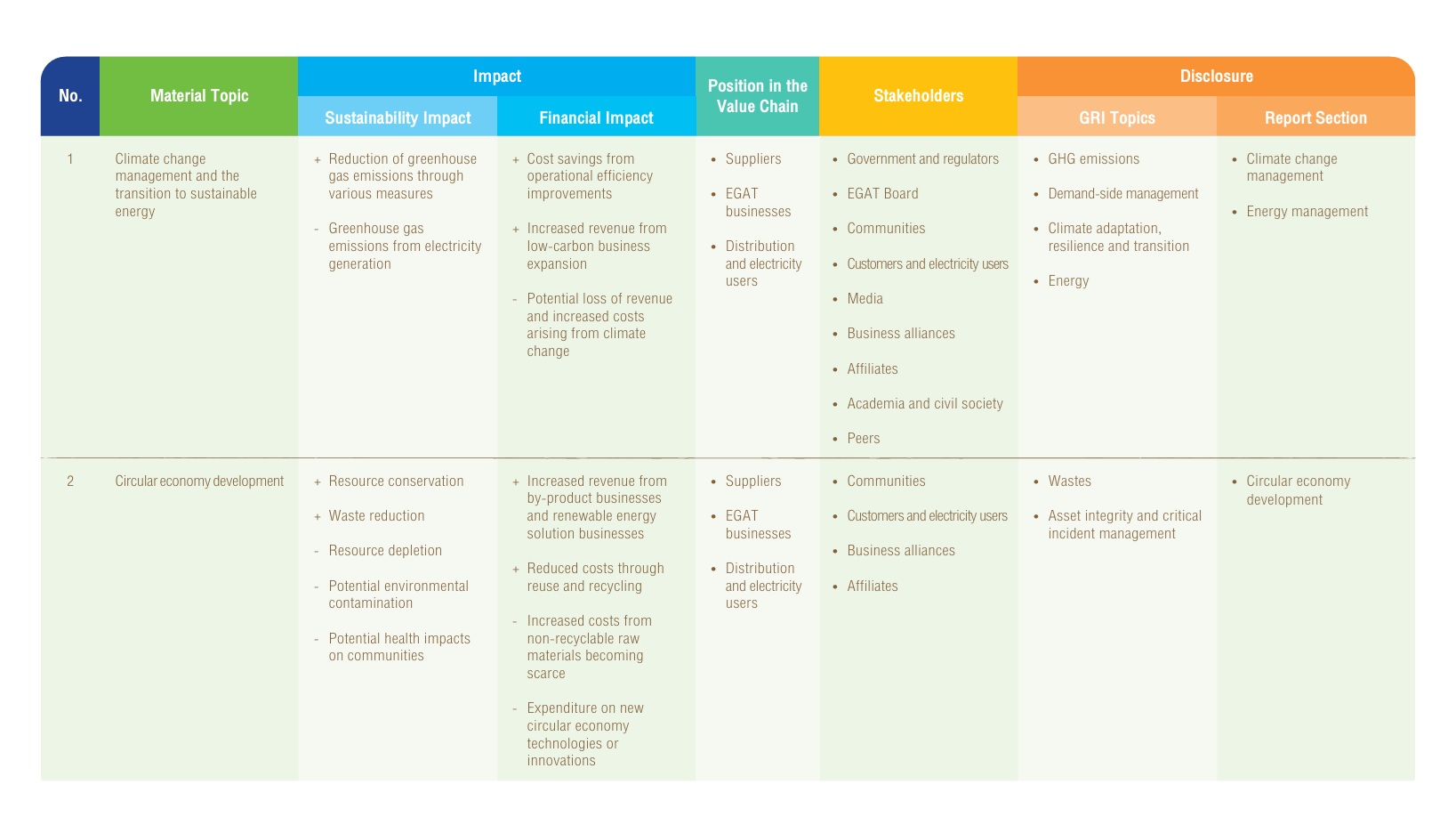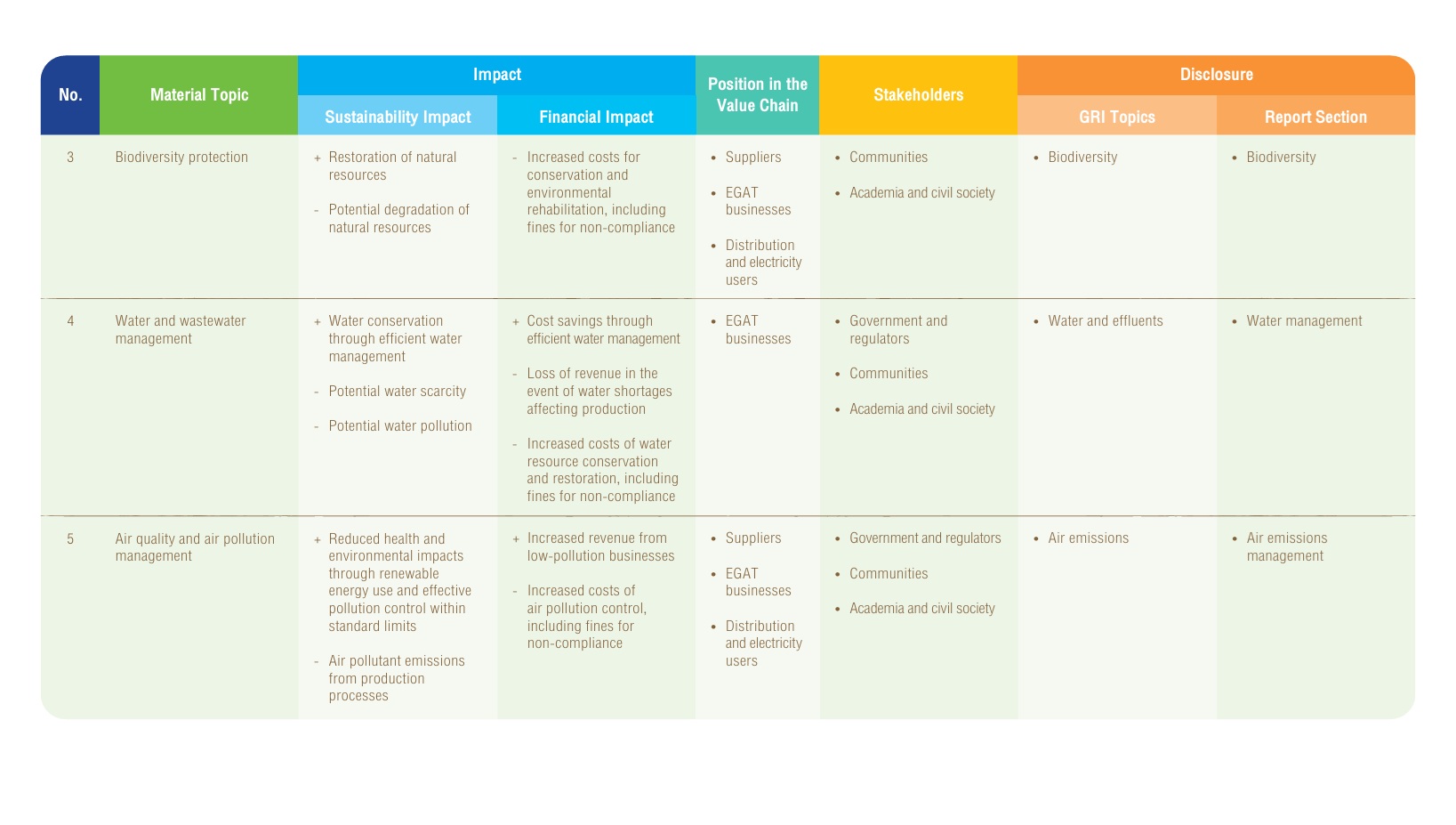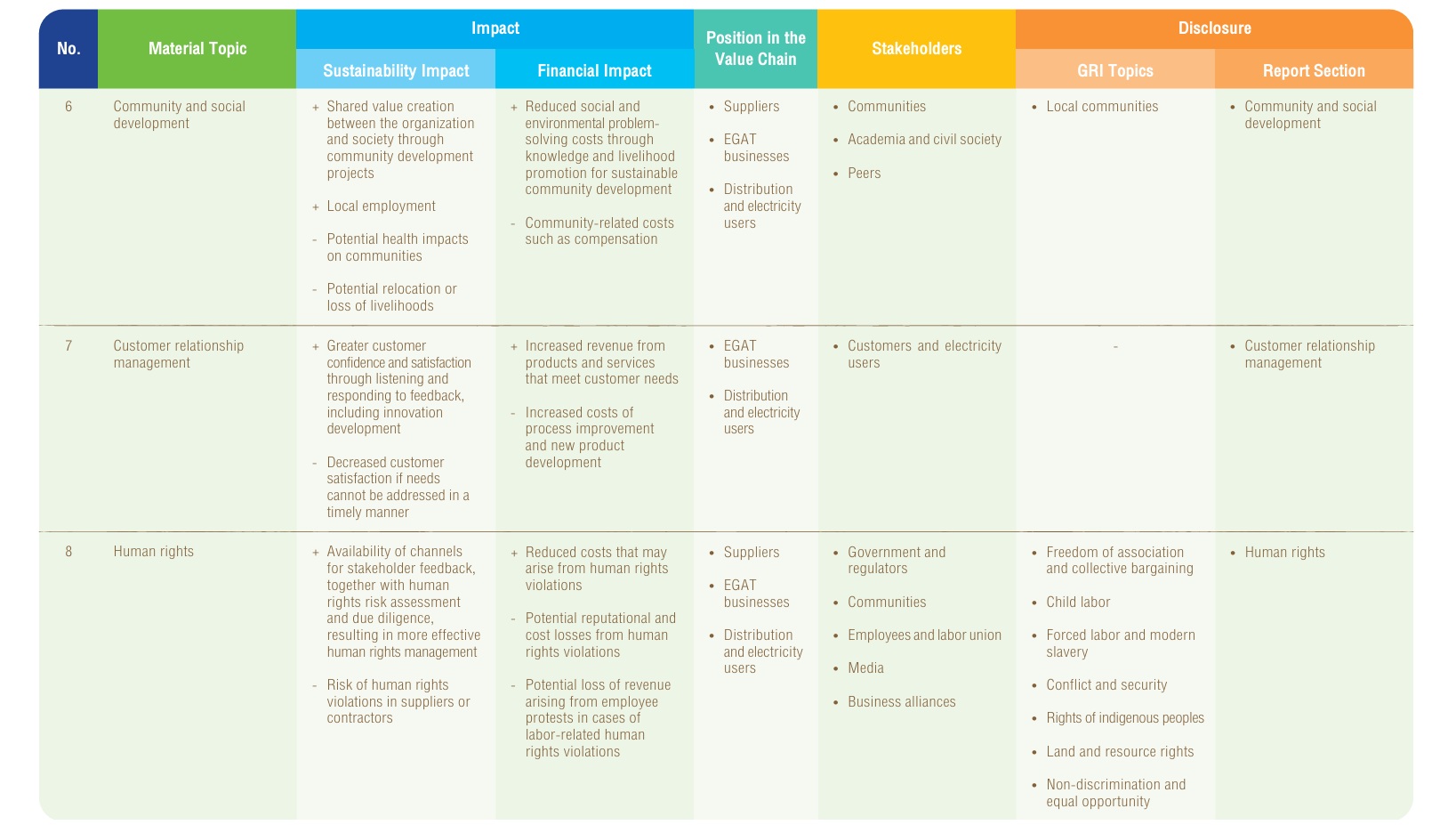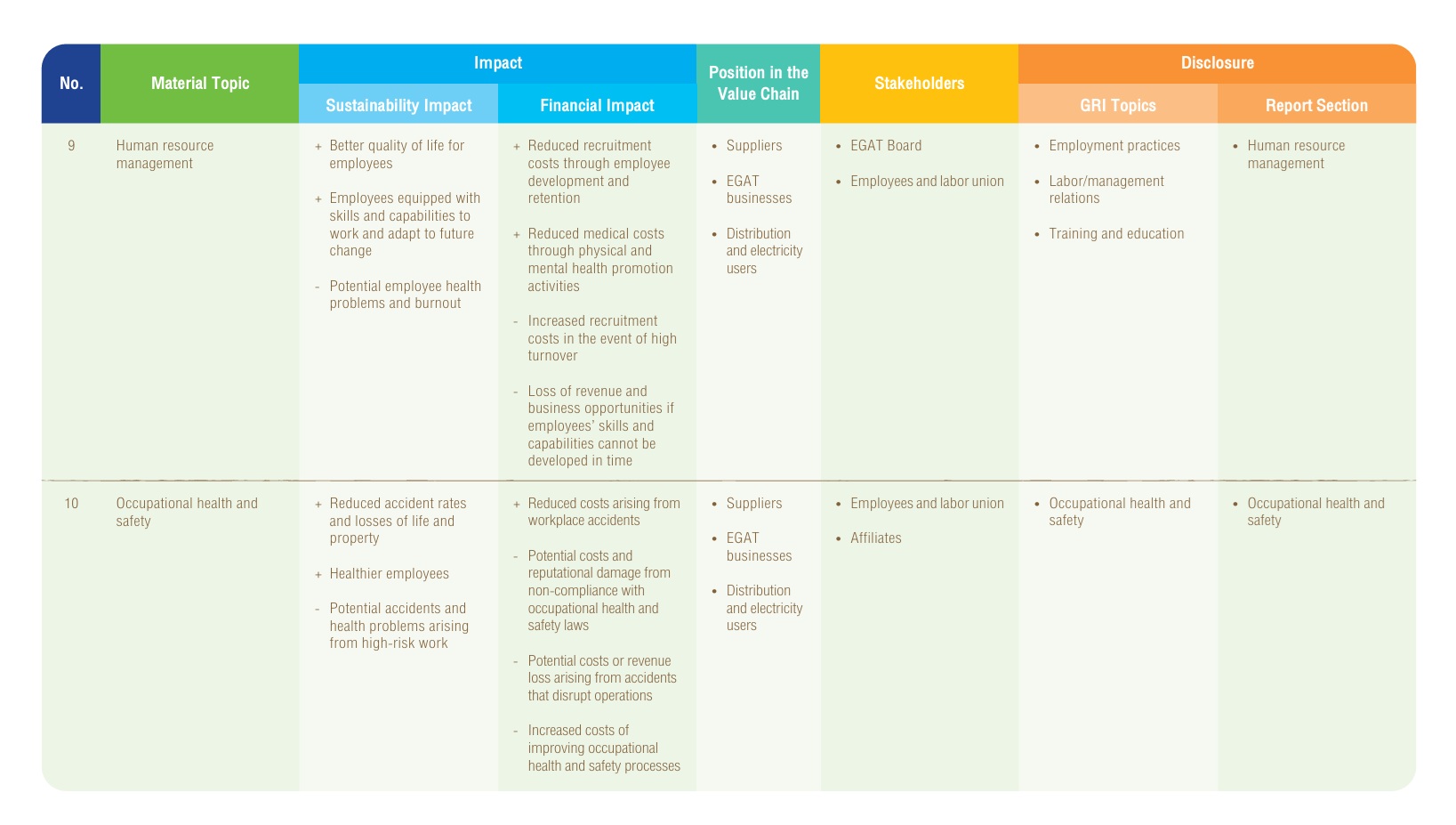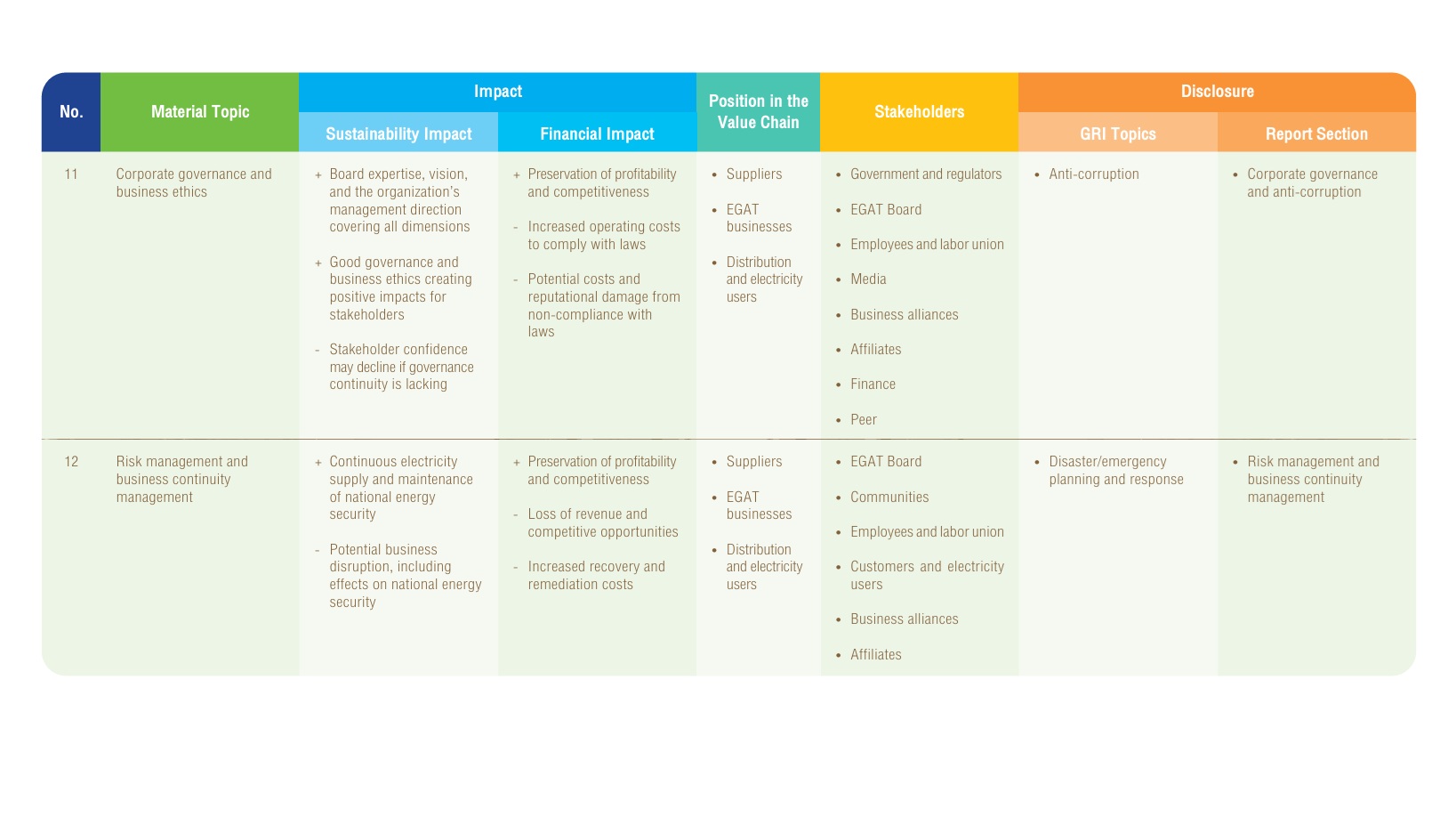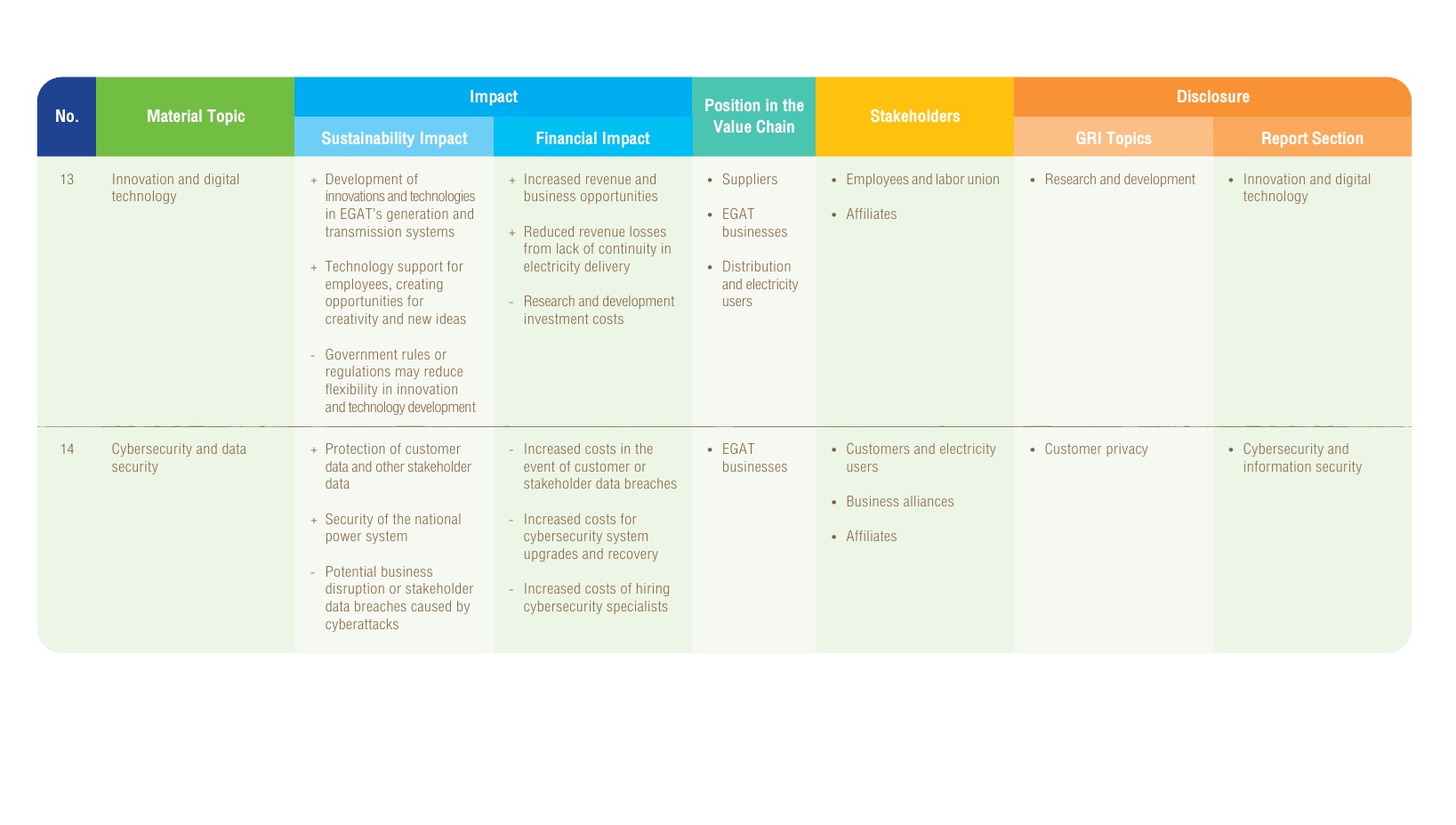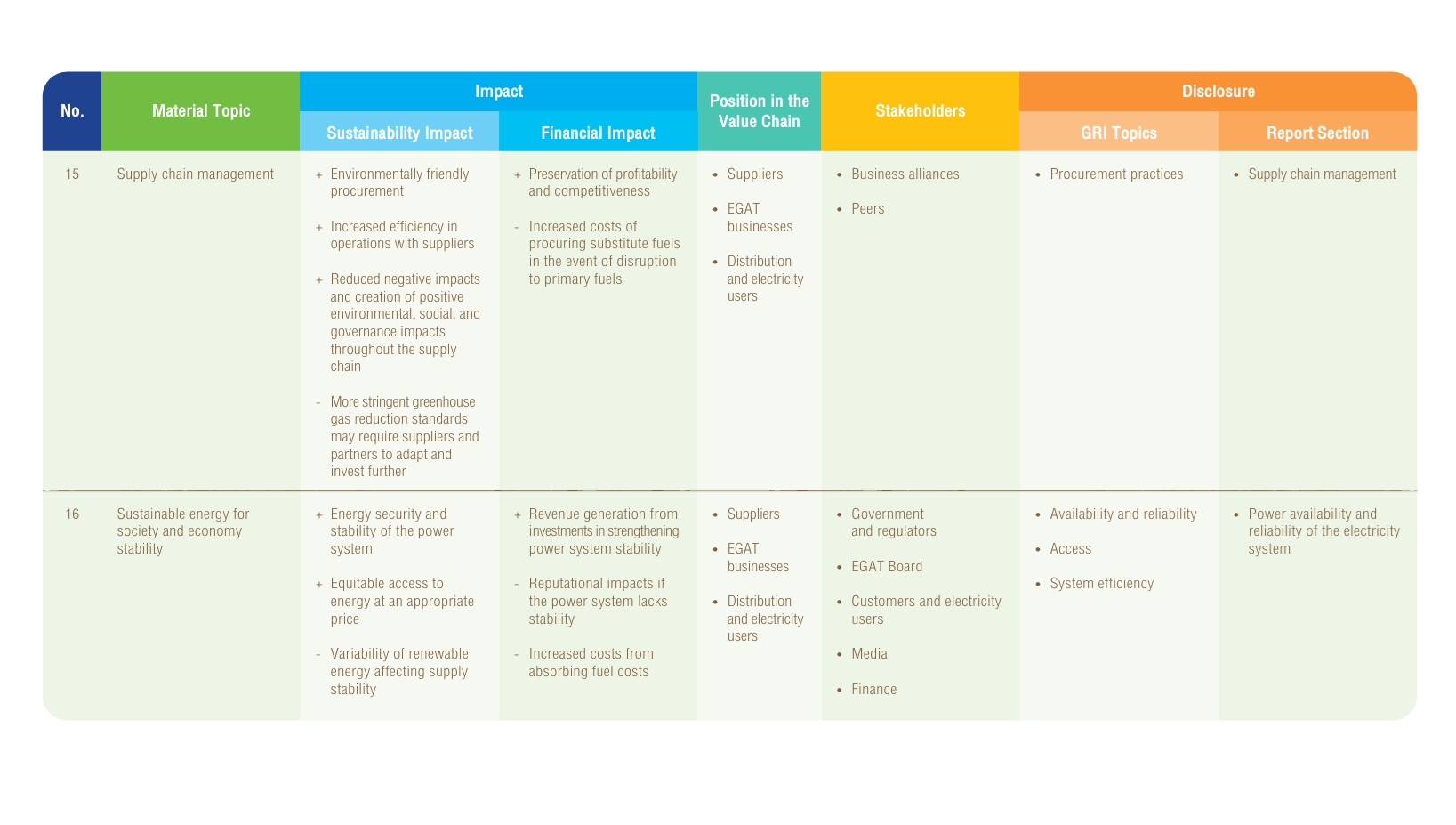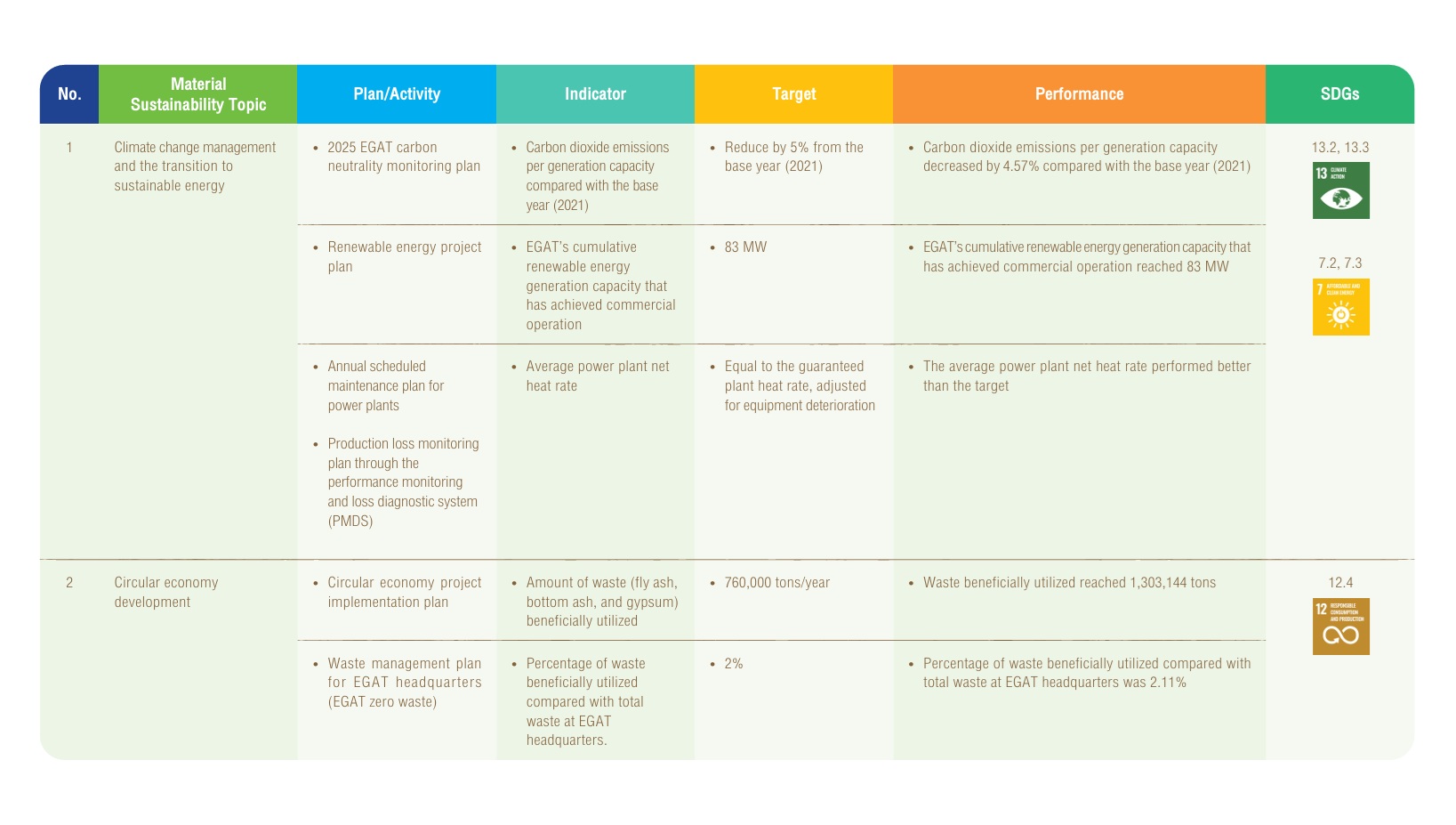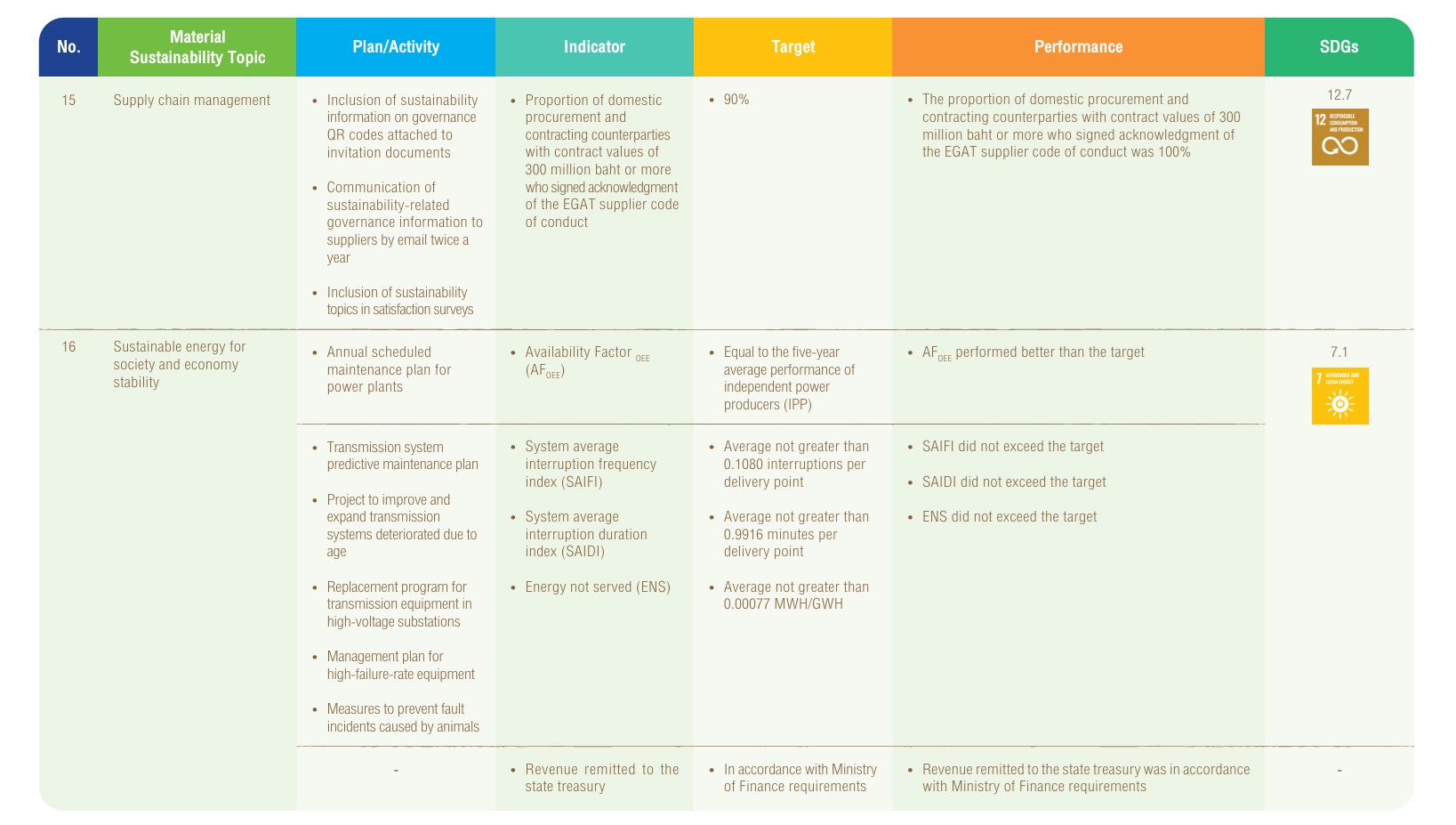
Material Sustainability Topics
Process for determining material sustainability topics
EGAT reviews its material sustainability topics on an annual basis. In 2025, EGAT adopted a double materiality assessment approach to ensure a more comprehensive and holistic identification of material topics. This approach considers both the inside-out perspective through sustainability impact assessment and the outside-in perspective through financial impact assessment. From the inside-out perspective, EGAT assesses the positive and negative impacts arising from its operations on the economy, environment and society. From the outside-in perspective, EGAT evaluates financial impacts to identify sustainability-related risks and opportunities that may affect the organization’s operations, performance and long-term value creation.
The assessment process is aligned with internationally recognized standards and frameworks, including the materiality determination guidance of the Global Reporting Initiative (GRI) Standards, the financial impact assessment guidance of the International Financial Reporting Standards (IFRS), the stakeholder engagement principles of AA1000, the requirements of the European Union’s Corporate Sustainability Reporting Directive (CSRD) and the Double Materiality Assessment guidance under the European Sustainability Reporting Standards (ESRS).
The key steps of the process are as follows:
1. Review of organizational context, standards and industry peers to identify initial material sustainability topics
- Review the organizational context and value chain, covering operational activities, stakeholders, organizational policy and strategy.
- Study and compare EGAT’s context with international frameworks and standards, including the SASB Standards, the sustainability assessment criteria of S&P Global and MSCI, as well as the practices of industry peers both in Thailand and internationally.
- Summarize initial material sustainability topics relevant to EGAT.
2. Stakeholder engagement
- Conduct interviews and survey with all stakeholder groups regarding the positive and negative impacts of material sustainability topics, and validate and confirm the completeness of material sustainability topics.
- Conduct interviews with senior executives regarding the impacts, risks and opportunities associated with material sustainability topics, and validate and confirm the completeness of such topics.
- Identify material sustainability topics.
3. Mapping sustainability impact pathways and financial impact pathways
- Define the sustainability impact pathway from the inside-out perspective by considering how EGAT’s operations throughout the value chain affect stakeholders, society and the environment across environmental, social, economic and governance dimensions; where these impacts occur along the value chain; whether they are actual or potential impacts; whether they are positive or negative; and over what timeframe they arise.
- Define the financial impact pathway from the outside-in perspective by considering how external factors affect the organization’s operations or finances, and whether those effects constitute risks or opportunities.
4. Assess sustainability materiality and financial materiality
- Assess sustainability materiality by assigning scores (1–5) across four factors: (1) scale of impact, (2) scope of impact, (3) remediability (for negative impacts), and (4) likelihood of occurrence (for potential impacts).
- Assess financial materiality by assigning scores (1–5) across three factors: (1) severity of impact (financial, legal, reputational, strategic, and occupational health and safety aspects), (2) likelihood of occurrence, and (3) time horizon (short, medium and long term).
- Validate and confirm the results of the sustainability materiality assessment and financial materiality assessment with relevant business units.
5. Conduct double materiality assessment of material sustainability topics
- Assess and prioritize material sustainability topics under the double materiality approach, covering both sustainability materiality and financial materiality.
- Verify material sustainability topics against the relevant GRI sector standards and with subject-matter experts.
- Validate and confirm material sustainability topics with senior management.
- Seek approval from the Governance and Sustainability Committee.
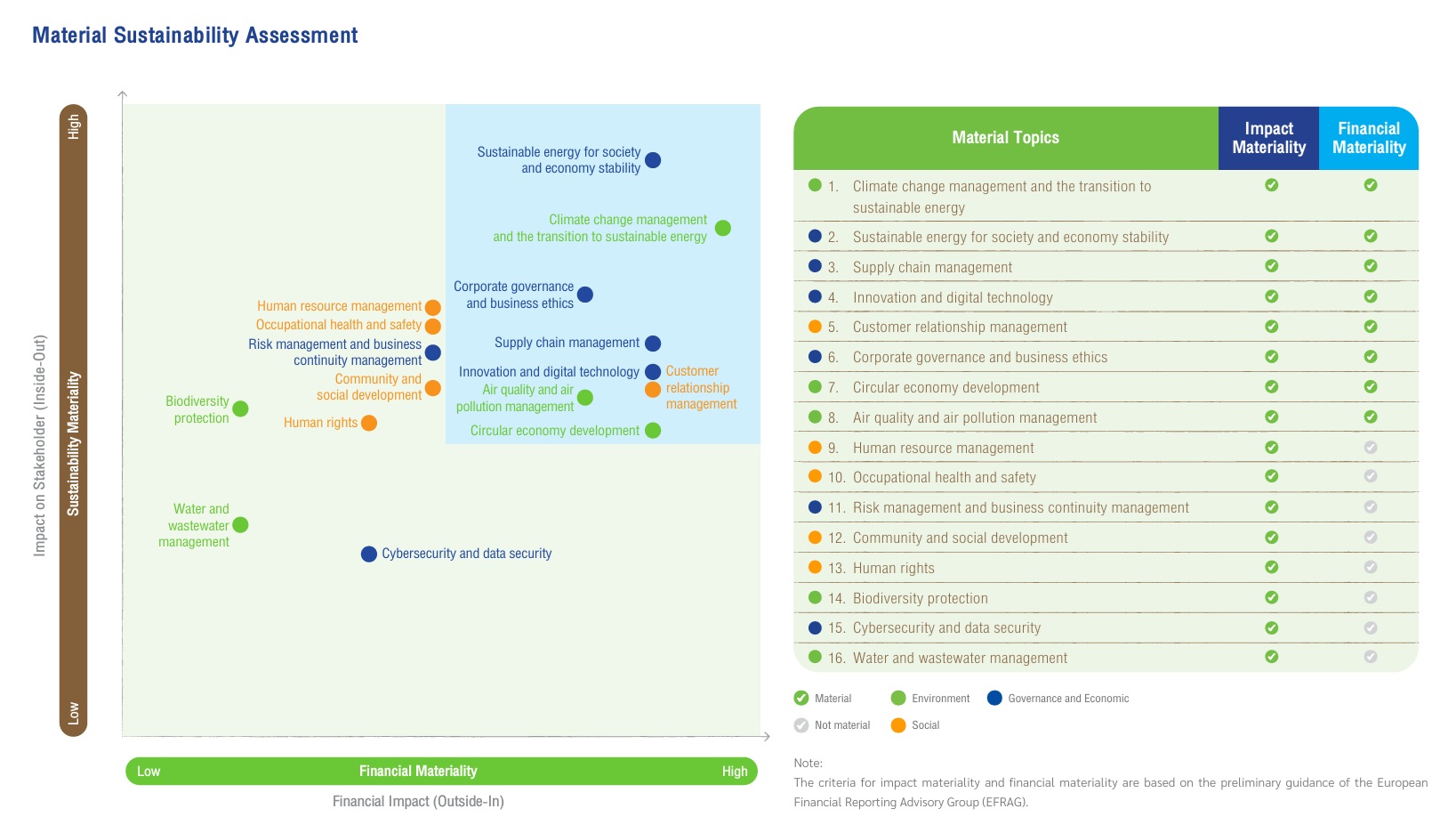
Changes in Material Topics
In 2025, EGAT identified 16 material sustainability topics covering economic, governance, environmental, social, and human rights dimensions. Important consolidations and expansions in scope were as follows:
| 2025 Material Topics | Key Changes |
| Climate change management and the transition to sustainable energy | Consolidated from the former topics of “Renewable energy and new energy management,” “Climate change,” and “Energy management and energy efficiency.” |
| Sustainable energy for society and economic stability | Consolidated from the former topics of “Availability and reliability of electricity generation and transmission,” “Access to Energy,” and “Economic Impact.” |
| – | The topic of “Stakeholder management” has been integrated into all material topics. |