

EGAT supports MIT international forum, reinforcing its leadership role in driving ASEAN’s energy transition toward sustainability
2 February 2026EGAT joined in driving the energy transition of Southeast Asia, supporting the international academic forum “Powering Southeast Asia through 2050” and creating a space for exchanging strategies on energy, climate, and sustainability, while building cooperation with the global network.

Mr. Warit Rattanachuen, Deputy Governor – Strategy of the Electricity Generating Authority of Thailand (EGAT) led a team of EGAT executives and representatives to join the international academic forum “Powering Southeast Asia through 2050: Building a Sustainable and Energy-Resilient ASEAN” held by the Massachusetts Institute of Technology (MIT). The event was attended by MIT executives and specialists as well as representatives from government agencies, industrial sector, educational institutions, and non-governmental organizations in Southeast Asia totaling over 400 participants, in order to exchange knowledge and perspectives on energy, climate, and sustainability, which can be further developed into policy formulation and implementation to create tangible impact and help drive ASEAN toward the clean energy goal.
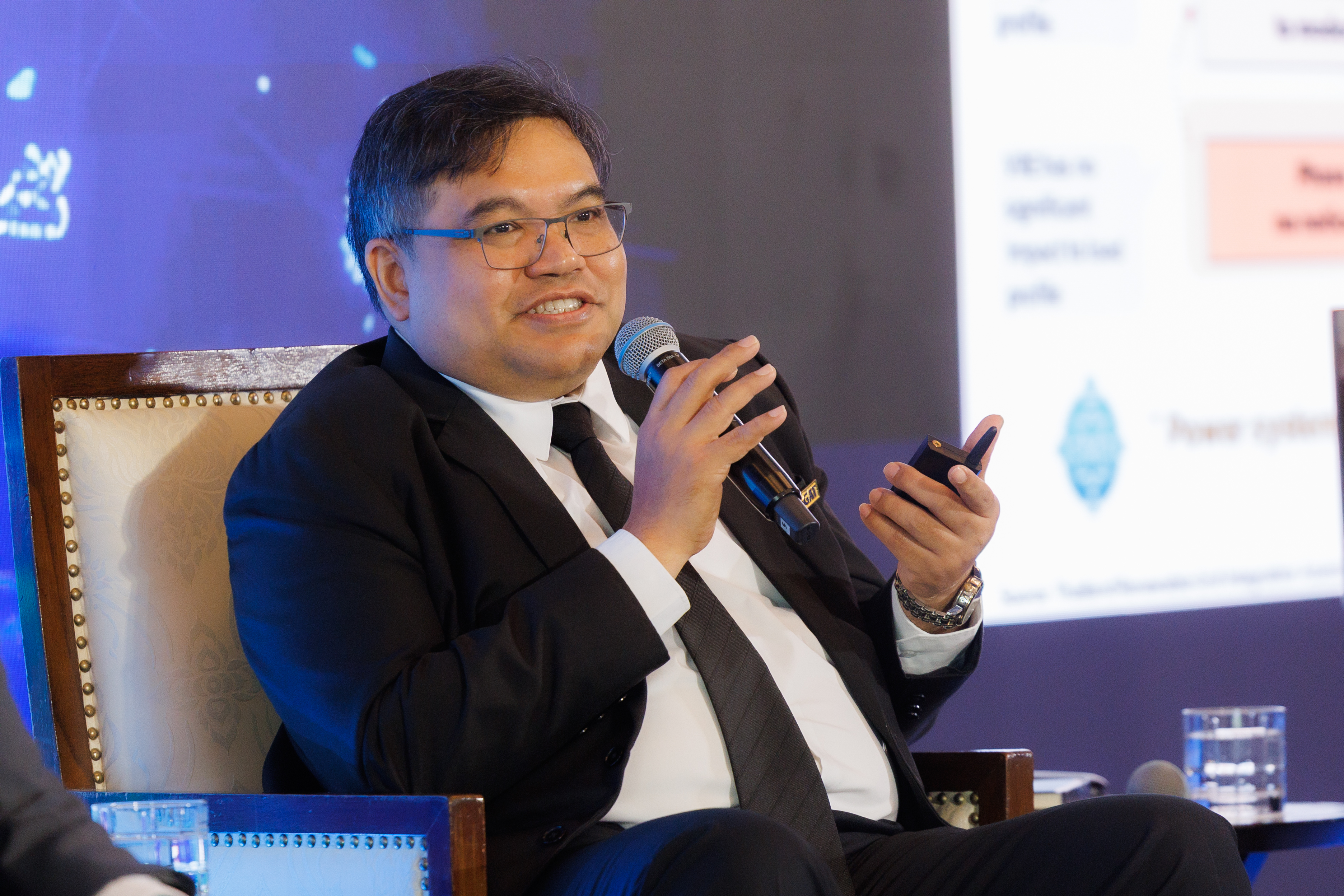
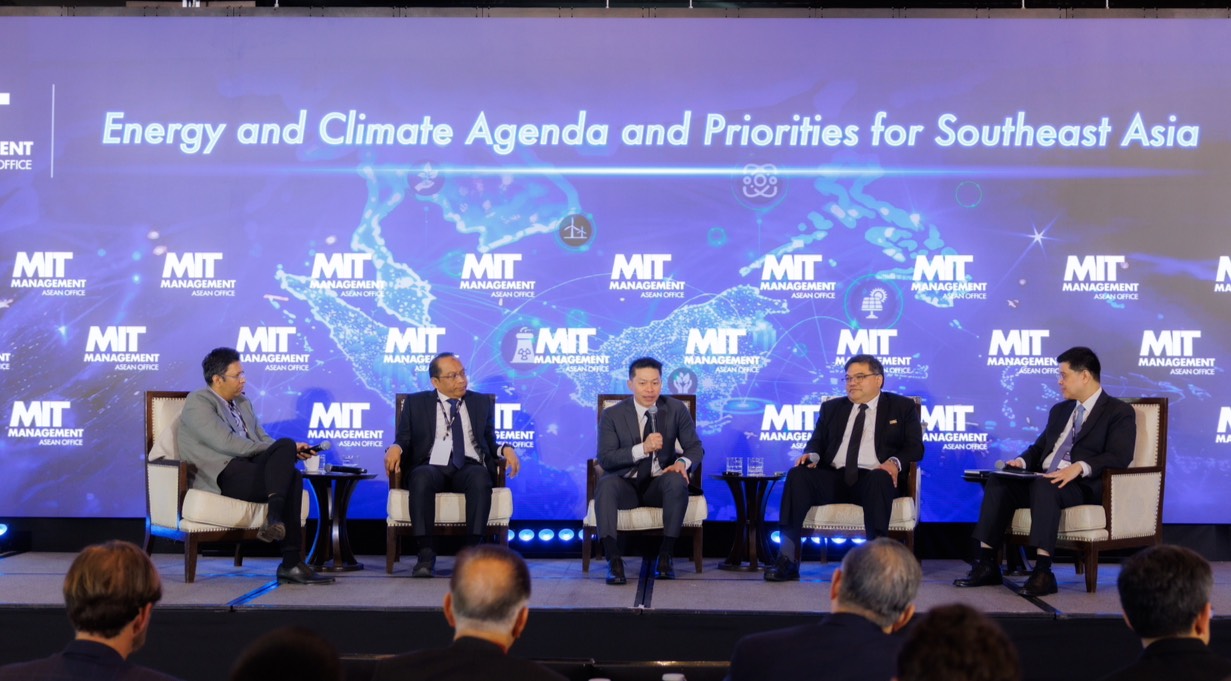
Mr. Warit Rattanachuen, EGAT Deputy Governor – Strategy participated in the seminar on the topic of “Energy and Climate Agenda and Priorities for Southeast Asia” joined by representatives from top global organizations to exchange views on policies and strategies on energy and climate in Southeast Asia, covering long-term development goals, the future of the power system, and challenges that may impact the region. During the seminar, he discussed EGAT’s operational direction in enhancing power system security amid the increasing proportion of renewable energy, which includes improving power system flexibility, supporting emerging clean power technologies, applying renewable energy forecast system and energy storage system, as well as studying and developing high-potential energy technologies, such as hydrogen and Small Modular Reactor (SMR) to reduce greenhouse gas emissions. He also emphasized that sustainable energy transition of the region should adhere to the principle of “leaving no one behind.” This is due to the region’s unequal power system development, with electricity access rate reaching only 60 percent. Therefore, energy policies must consider all sectors in order to enhance energy security covering all of Southeast Asia in all dimensions.
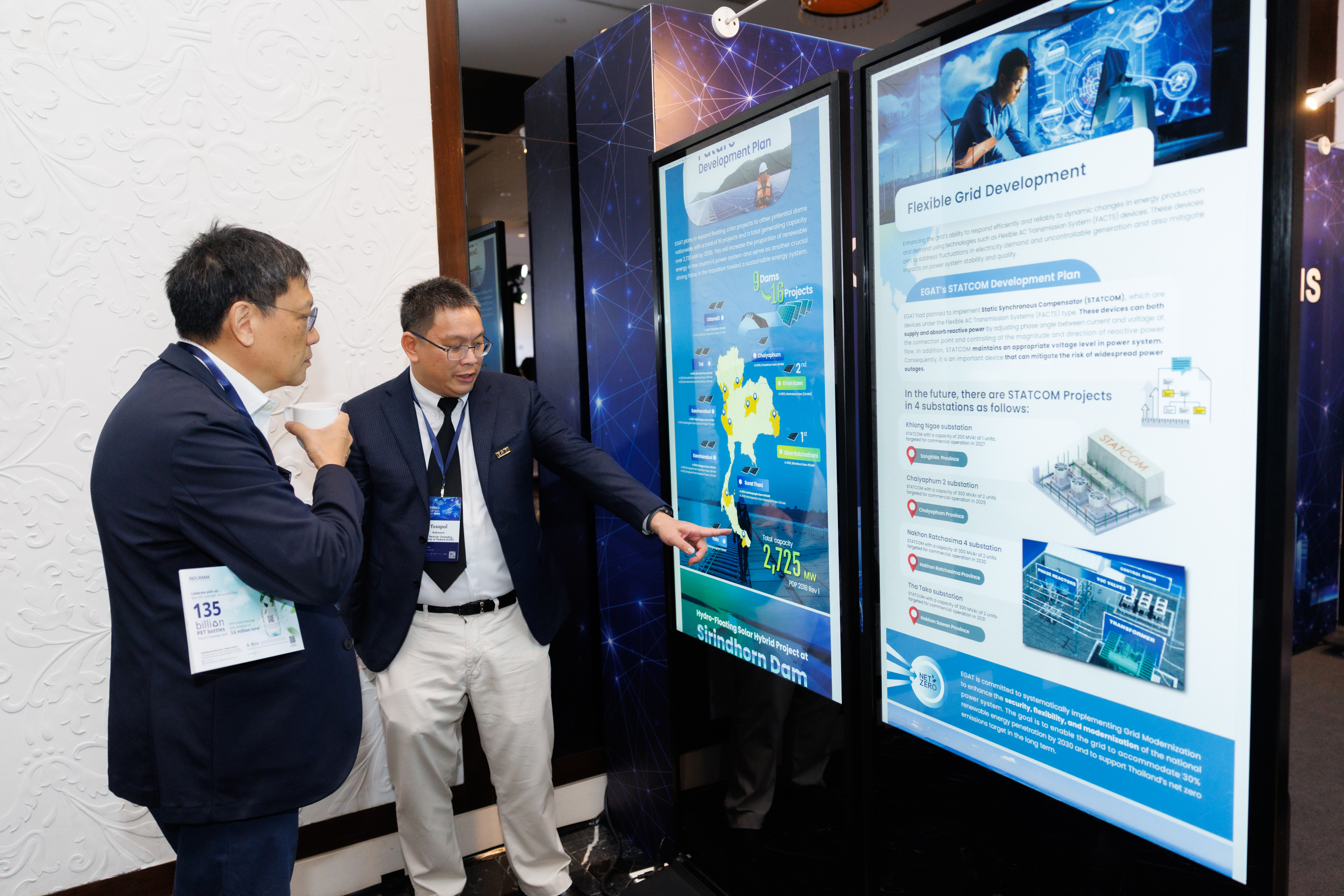

Additionally, EGAT held an exhibition to showcase energy innovations under the concept “Innovate Power Solutions for a Better Life” presenting concrete guidelines for energy development through four zones. The first zone, Grid Modernization, showcased the development of a modern and flexible power system to support the increasing renewable energy and enhance power system stability. The second zone, Floating Photovoltaic (FPV), showcased EGAT’s floating solar power plant projects which help increase the efficiency of electricity generation and reduce greenhouse gas emissions. The third zone showcased the study of Small Modular Reactor (SMR) technology, a low carbon energy source that is highly safe. The last zone showcased Decarbonization Solutions, from promoting the EV ecosystem to green energy mechanisms, such as Renewable Energy Certificate (REC) and Utility Green Tariff (UGT) to assist in the sustainable clean energy transition.