

EGAT – CMU to study power plant by-product to support carbon neutrality trend
12 July 2022EGAT and Energy Research and Development Institute – Nakornping, Chiang Mai University, signed a research funding program to study calcium carbonate production from FGD gypsum with carbon capture, aiming to reduce greenhouse gas emissions to move toward carbon neutrality.
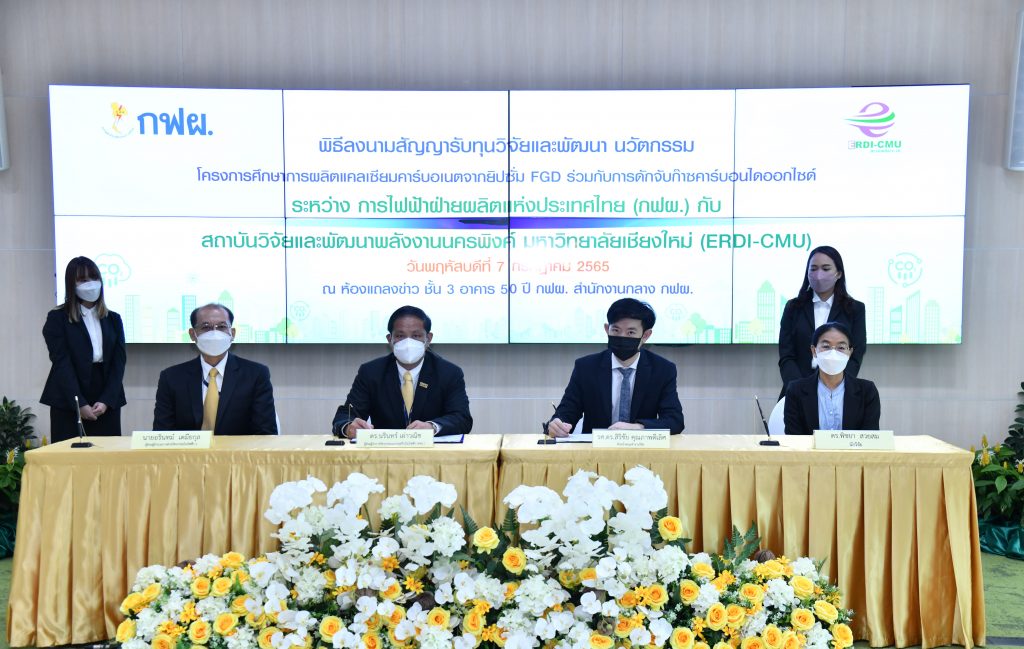
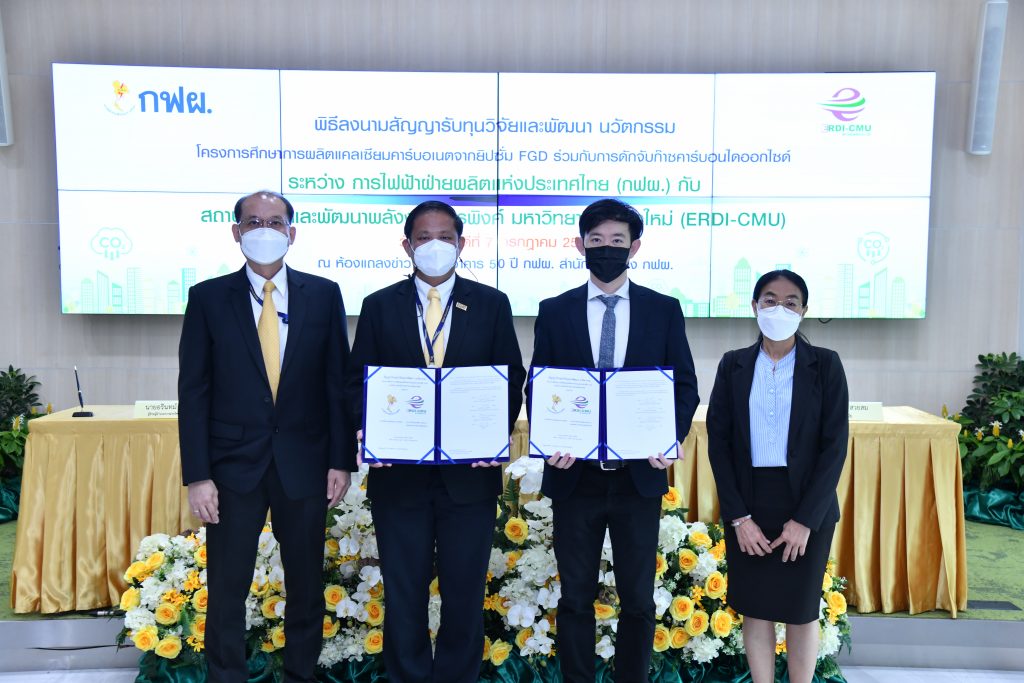
On July 7, 2022, Mr. Prasertsak Cherngchawano, Deputy Governor – Power Plant Development and Renewable Energy of Electricity Generating Authority of Thailand (EGAT), presided over the signing ceremony on the research funding program for calcium carbonate production from FGD gypsum with carbon capture, in which Mr. Narin Phoawanich, EGAT Assistant Governor – Power Plant Engineering and Construction, and Assoc. Prof. Dr. Sirichai Koonaphapdeelert, Head of Research Team of Energy Research and Development Institute – Nakornping, Chiang Mai University, signed the contract. On this occasion, Asst. Prof. Dr. Pruk Aggarangsi, President of the Institute, and the research team attended the ceremony held at EGAT Headquarters, Nonthaburi Province.
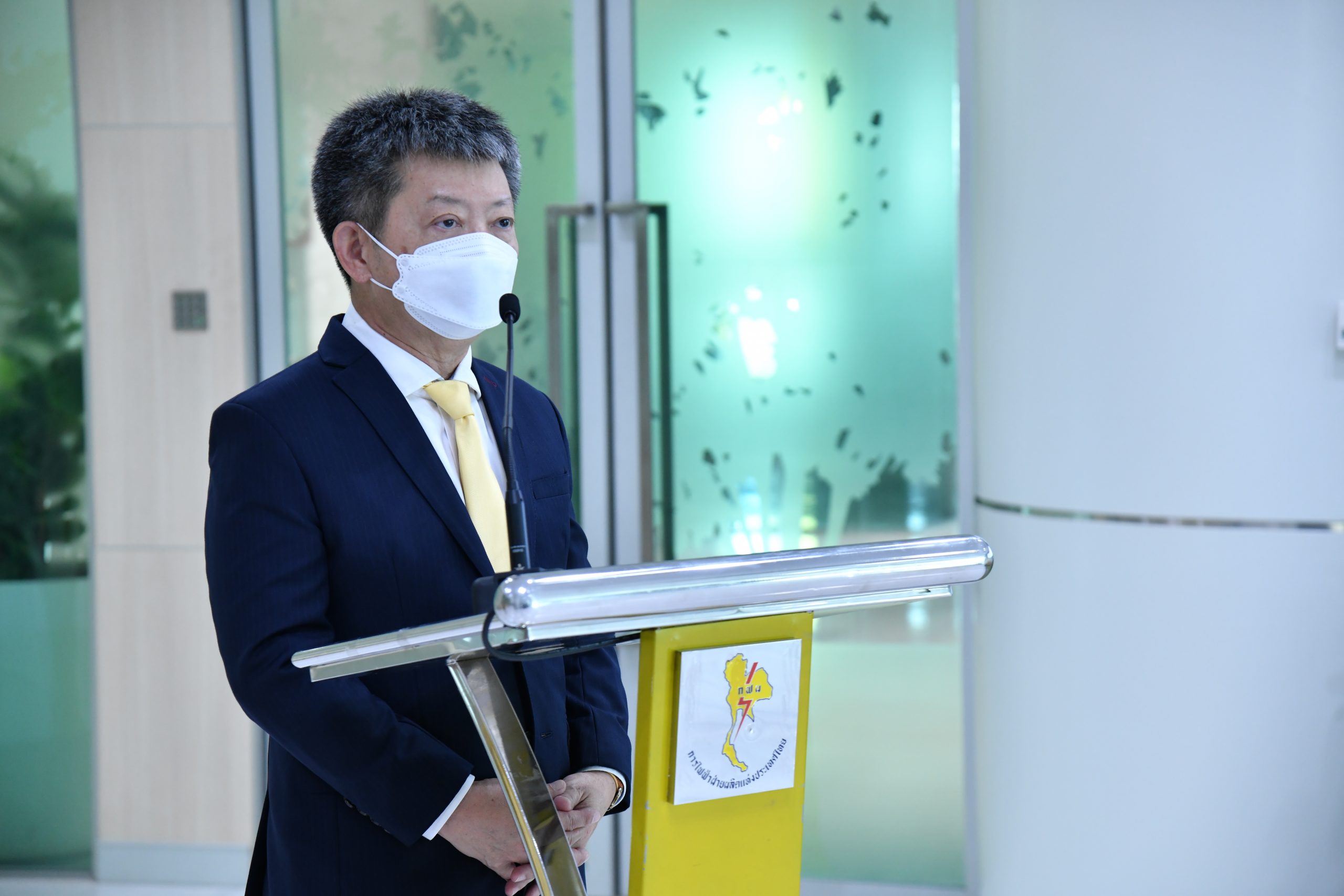
Mr. Prasertsak Cherngchawano revealed that this research program is a pilot project under the development of carbon capture technology. It uses captured carbon from power generation and gypsum, a by-product of the pollutant removal process of power plant, to develop calcium carbonate that can be used for commercial purposes. This funding program plays a part in pushing the country toward the carbon neutrality goal by promoting a tangible use of Carbon Capture, Utilization, and Storage: CCUS.
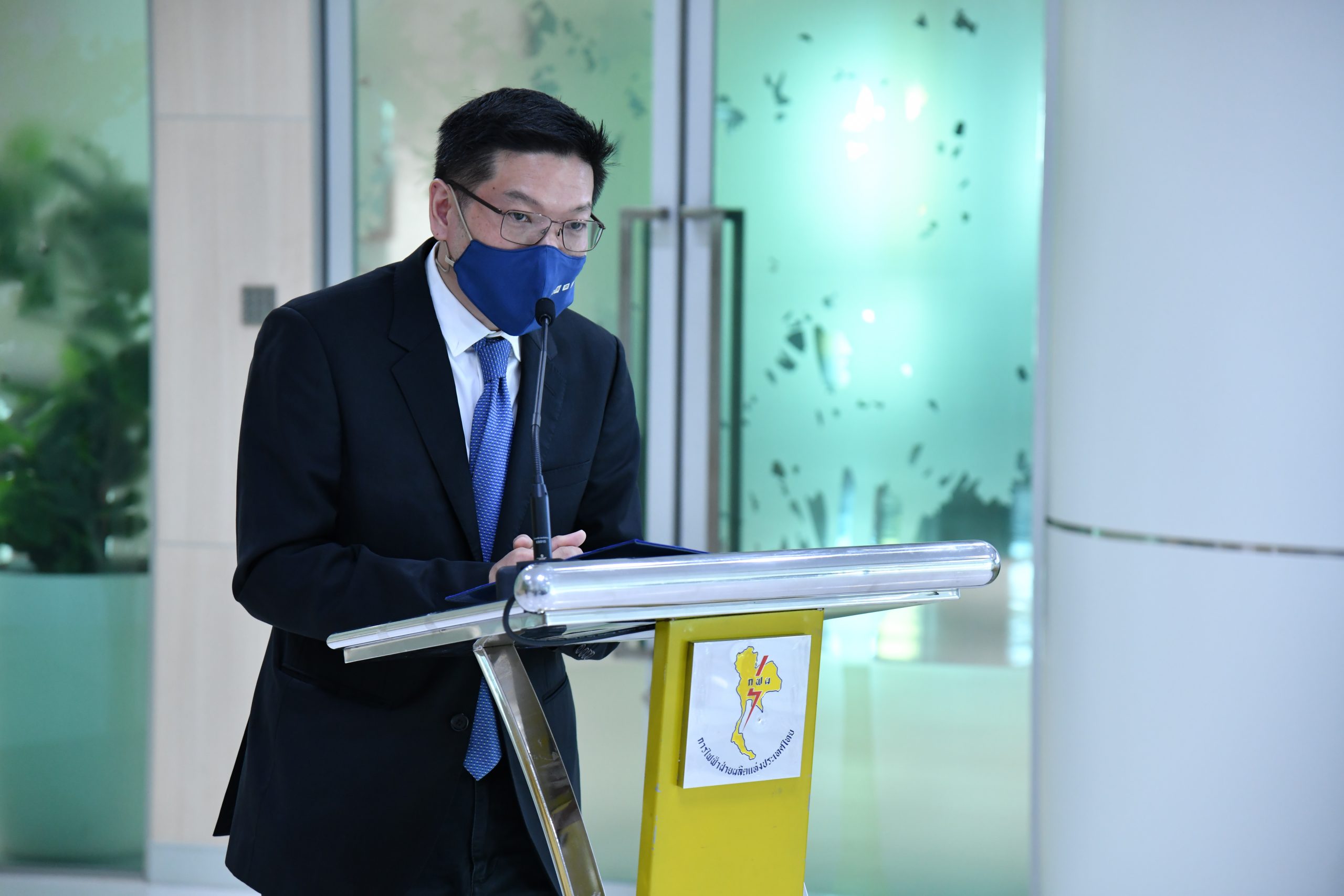
Asst. Prof. Dr. Pruk Aggarangsi added that this research funding program has the duration from July 1, 2022 – December 31, 2023, and focuses on the study of the efficiency and synthesis process of calcium carbonate from FGD gypsum, which is a by-product of sulfur dioxide removal of power plant. The calcium carbonate will be reused in the Flue-gas Desulfurization (FGD) of power plant to decrease carbon emission, a cause of global warming. The team also studies technological and economic possibilities of calcium carbonate production to be suitably applied in EGAT operations and business sectors.