

EGAT partners with allies to enhance air quality management, integrating ground-based and satellite data to tackle PM2.5
17 February 2025EGAT, the Ministry of Energy, Pollution Control Department, GITSDA, and Chulalongkorn University have pledged a collaboration on air quality management, exchanging ground-based and satellite data to analyze causes of pollution and PM2.5, with the aim to develop policies for air quality improvement and ensure clean air for Thais.
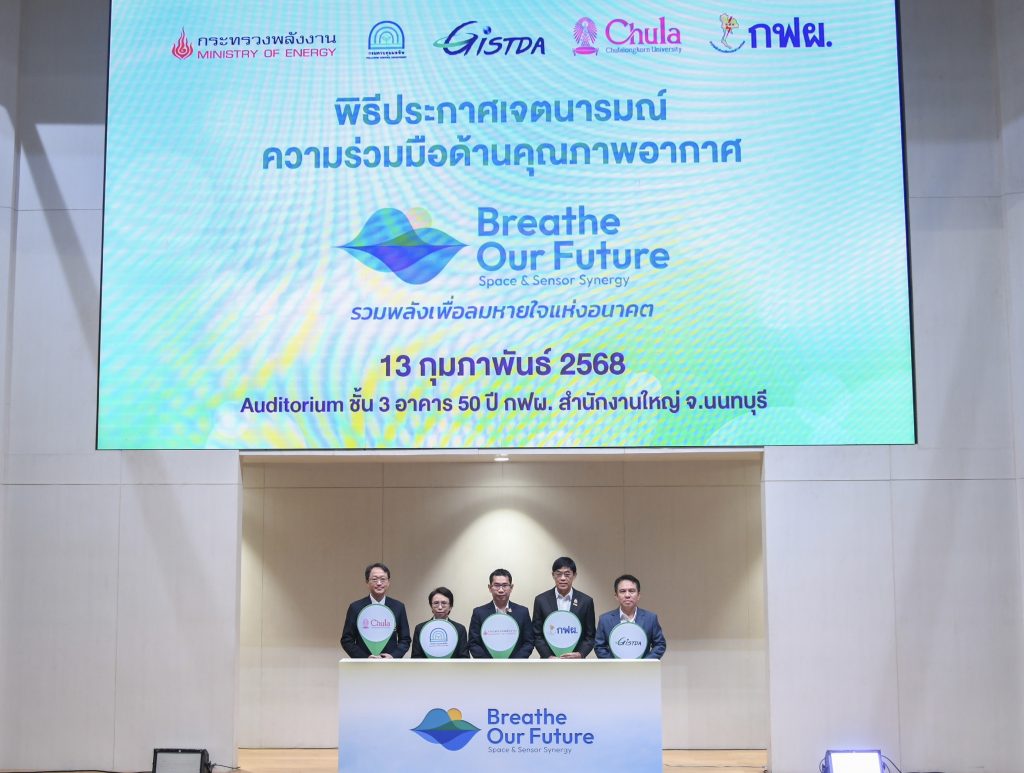
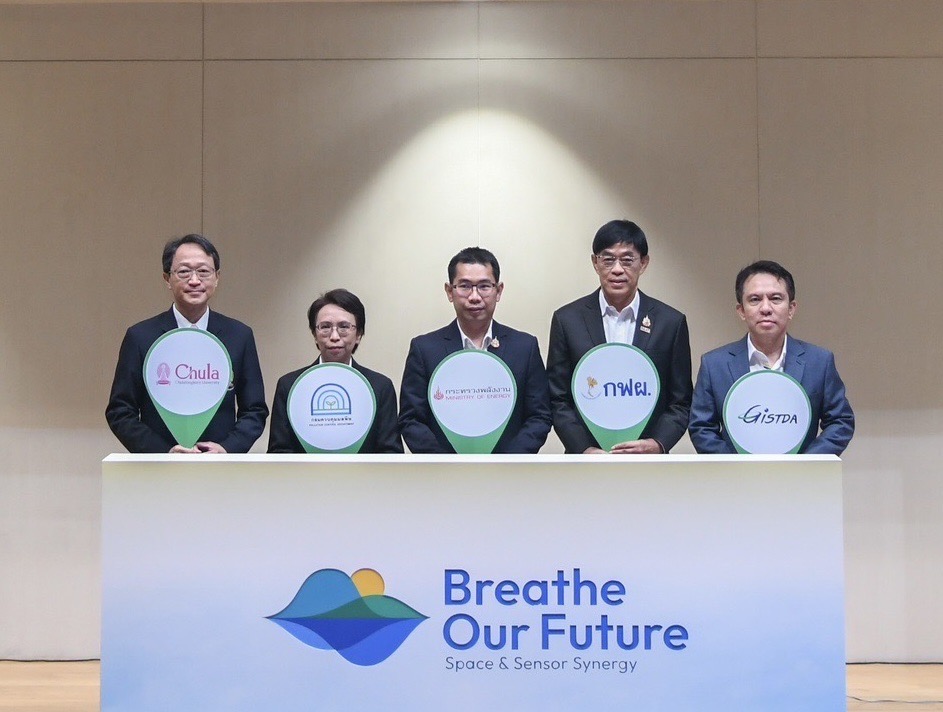
The Ministry of Energy, Pollution Control Department, Geo-Informatics and Space Technology Development Agency (GITSDA), Chulalongkorn University, and the Electricity Generating Authority of Thailand (EGAT) have pledged to collaborate on air quality management, “Breathe Our Future: Space & Sensor Synergy,” at the auditorium, EGAT 50th Anniversary Building, Headquarters, Nonthaburi Province on February 13, 2025.
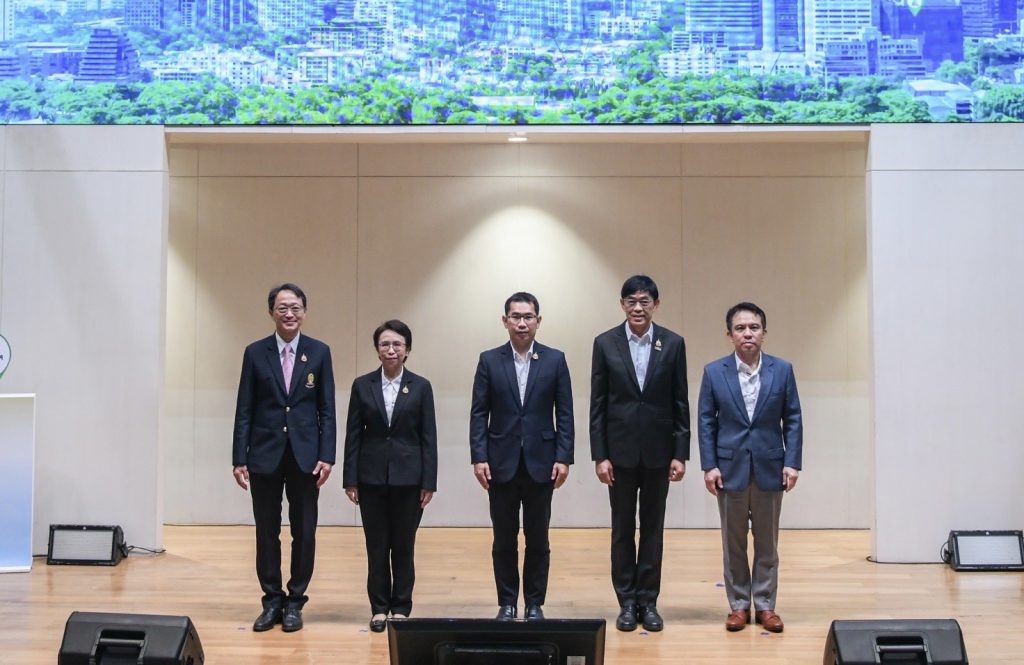
Mr. Sompop Pattanariyankool, Deputy Permanent Secretary of the Ministry of Energy, stated that the Ministry of Energy has driven energy transition policies to reduce greenhouse gas emissions and PM2.5 which are global challenges. The policies include developing electric vehicle (EV) infrastructure to promote EV adoption, improving fuel quality, using biomass for electricity generation to reduce open burning, and supporting the Sensor for ALL network to identify causes of particulate matter. The findings will be used for developing policies to tackle the issues sustainably.
Ms. Preeyaporn Suwanaged, Director of Pollution Control Department, said that preventing pollution at the sources is crucial for reducing air pollution and PM2.5, as well as expanding collaboration and developing tools. At present, the department has installed 100 air quality monitoring stations across 69 provinces, with plans to cover all provinces by 2026. The department is also collaborating with partners to analyze the data and ensure that it is effectively communicated to the public for maximum benefit.
Mrs. Kandasri Limpakom, Deputy Executive Director of GISTDA, revealed that GISTDA owns a satellite to monitor air pollution levels hourly, which helps support relevant agencies in tackling particulate matter at its sources. GISTDA also uses AI for forecasting and communicates with the public through the “Check Dust” application. GISTDA aims to integrate air quality data from both satellites and ground-based monitoring stations to accurately identify the sources of particulate matter, contributing to innovations for addressing air quality issues more sustainably.
Assoc. Prof. Witaya Wannasuphoprasit, Dean of the Faculty of Engineering, Chulalongkorn University, said that the university is dedicated to driving sustainability with the goal of becoming a green university. One of the initiatives is the development of “Sensor for ALL” which has been implemented for 7 years by installing air quality monitoring sensors at several locations. The faculty plans to collaborate with partners to integrate the ground-based monitoring data with satellite data for more accurate results.
Mr. Thepparat Theppitak, Governor of EGAT, revealed that EGAT carries out its mission of electricity generation along with environmental and social responsibility. The air quality is monitored and managed from the source of electricity generation to the end-users, using highly efficient technologies to ensure that emissions from power plants exceed the legal standards. Moreover, EGAT has implemented several measures; such as adopting EVs, promoting Label No.5 standards, providing Label No.5 electric motorcycles, installing an air purification system: “City Tree,” supporting products to address the particulate matter, and supporting fire prevention mission. EGAT has also collaborated with the Ministry of Energy and the Faculty of Engineering, Chulalongkorn University to install “Sensor for ALL” air quality monitoring sensors nationwide. By collecting 3-year data, it was found that Thailand has not yet solved or reduced PM2.5. Therefore, EGAT is working with partners to analyze the data and implement additional measures to reduce air pollution and PM2.5.
In pledging their collaboration on air quality management, the five agencies have integrated data and technologies to analyze sources of air pollution and PM2.5 more accurately. This will contribute to the development of air quality policies at both local and national levels and support the country’s air quality management, ultimately providing clean air and promoting better health for the Thai people.