

‘Bright Cities with Balanced Nature,’ when Sustainability is the Key to Every Power Generation Process
2 October 2026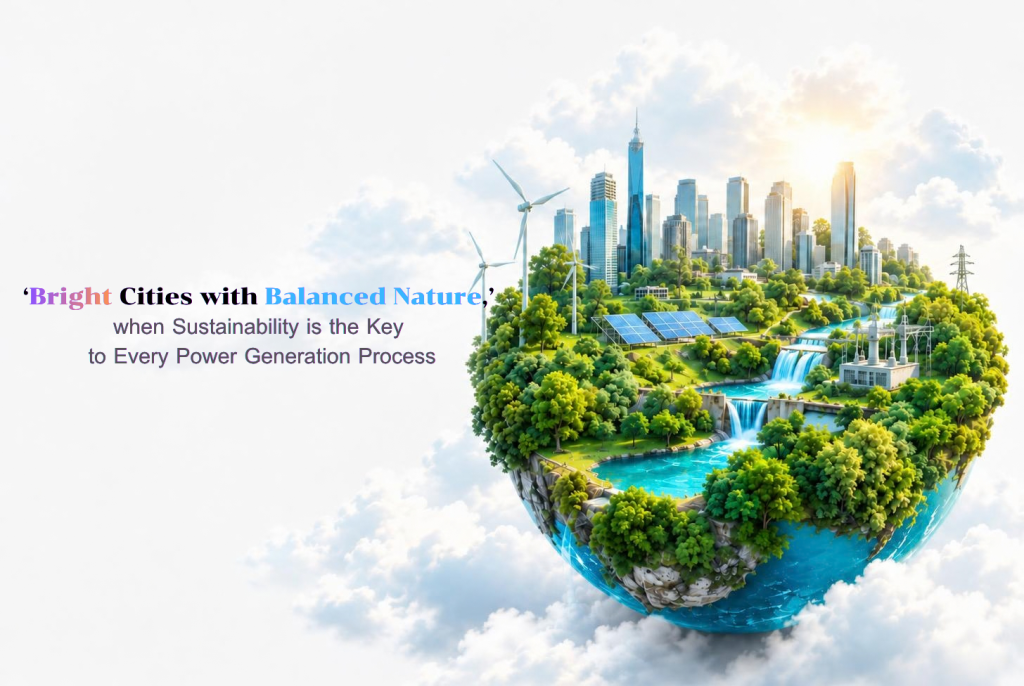
Today, “energy security” does not only mean providing sufficient power, but also generating power with responsibility in every process. The mission of the Electricity Generating Authority of Thailand (EGAT) goes beyond driving the economy and people’s way of life. It incorporates environmental conservation into every aspect and drives sustainability based on the concept of Circular Economy (CE), aiming to maximize resource efficiency and minimize environmental waste. Truly sustainable energy means that “secure power system” and “sustainability” must go hand in hand.

Electricity Generation with Air Quality Care
Although air is an invisible resource, its presence is felt in every breath. Therefore, air quality management around power plants must rely on modern technology, strict standards, and transparent data. EGAT places importance on fuel selection, combustion control, and installation of air pollution treatment systems suitable for each type of power plants, for controlling emissions released from power plant stacks within the limits specified in environmental impact assessment reports and legal standards. Moreover, continuous air quality monitoring is conducted both at the source and in the atmosphere of surrounding communities. The monitoring covers key pollutants such as particulate matter, sulfur dioxide, and nitrogen dioxide, building trust and confidence among neighboring communities.
Water Quality Care in Every Process
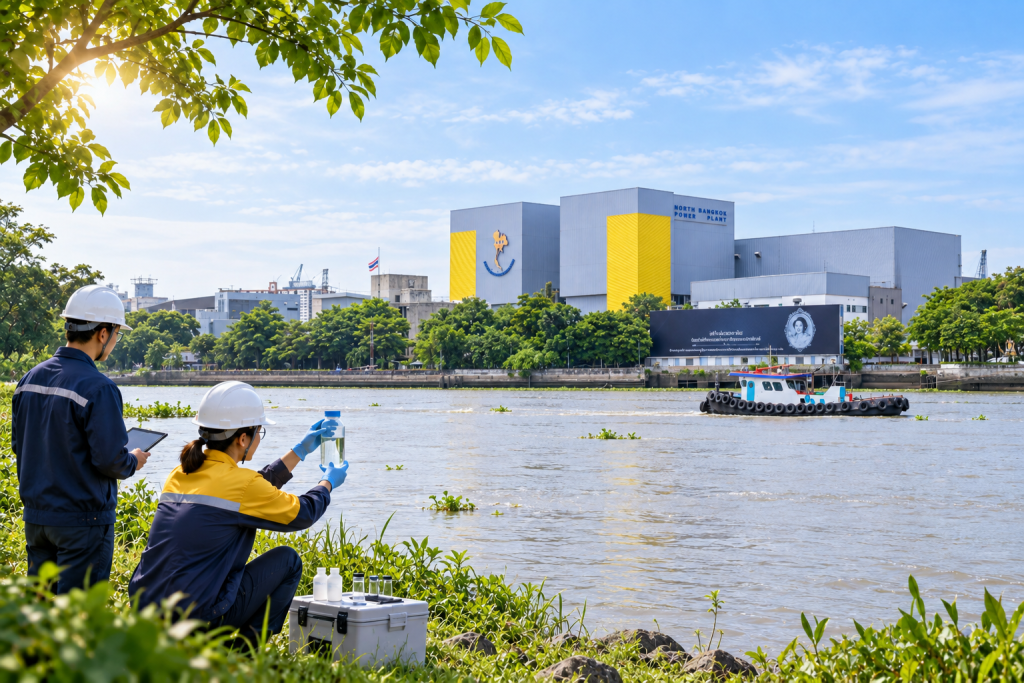
If air is the breath of life, “water” is the lifeblood that nourishes community ecosystem and plays a vital role in the electricity generation process, whether for hydropower generation, cooling systems, temperature control, or internal use within power plants. Therefore, EGAT implements comprehensive water management across the entire cycle, covering water allocation for suitable use, efficiency control of water use during operations, as well as water treatment and quality inspection before releasing it to the nature.
The heart of water care goes beyond controlling wastewater quality. It also includes “reducing water use, recycling for maximum benefit, and monitoring natural water sources,” alongside monitoring other dimensions such as aquatic ecosystem, noise levels, economic and social conditions, and the community’s quality of life. Since every element in nature is interconnected, environmental care must be considered in all dimensions.
Transform “Waste” to “New Resource”
Electricity generation process inevitably produces waste. Therefore, EGAT applies CE principles by reducing, reusing, repairing, reprocessing, and recycling. This goes beyond waste management; it includes improvement of generation efficiency, resource use for maximum benefit, green procurement, and innovation development to add value to by-products such as fly ash and synthetic gypsum which are by-products of the power generation process. They can serve as raw material substitutes in other industries instead of extracting new resources from nature. When waste from one industry becomes a resource for another, the amount of waste sent to landfills decreases, thus conserving natural resources and driving sustainable resource use.
Sustainability Starts from the Desk to Control Room
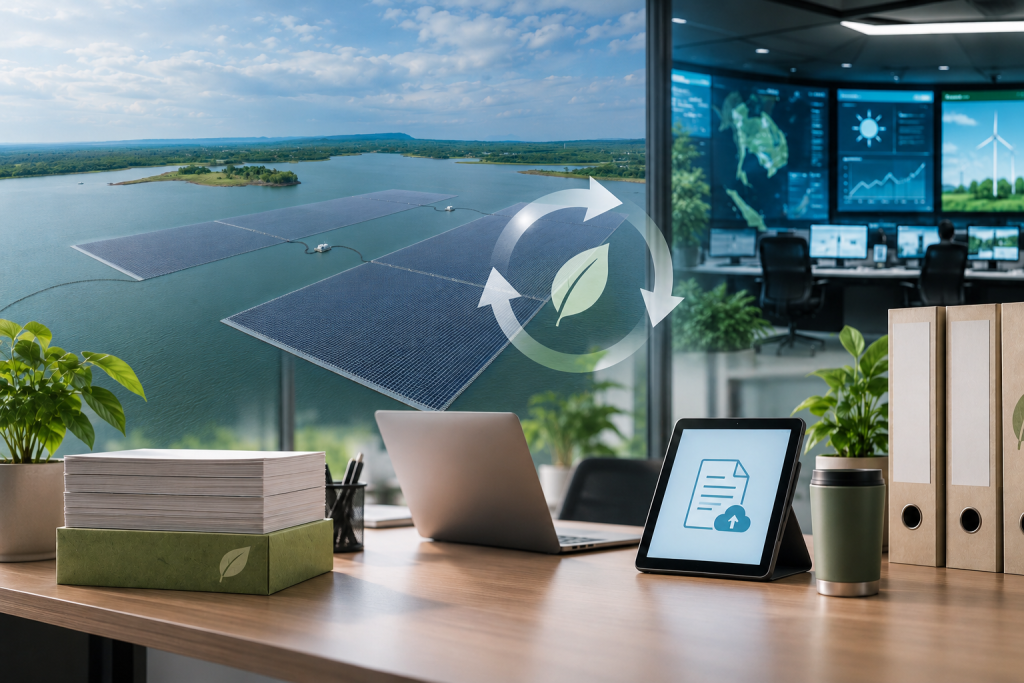
Sustainability achieves tangible results when it is embedded as part of the organizational culture at every level. This ranges from infrastructure engineering such as floating solar projects, solar farm projects, and hydropower plant projects that help increase renewable power generation to reduce reliance on fossil fuels and greenhouse gas emissions. It also extends to office operations such as the procurement of green products and services like green paper. Moreover, the transition to paperless digital finance and accounting systems reduces paper use and storage space, while increasing agility in data verification. Therefore, sustainability helps improve work efficiency while minimizing resource use.
Electricity generation and environmental care are not parallel lines that will never intersect. The power system cannot remain secure in the long term if natural resources degrade and communities lack trust. Therefore, sustainability is rooted in a mindset embedded in every process of electricity generation. Sustainable power goes beyond meeting the demands of today; it must be the energy that does not compromise tomorrow’s opportunities. Moreover, it is the energy that illuminates large cities and utilizes resources efficiently without harming pure air and waterways. Ultimately, it is the power that assures people that behind every light bulb, there are technologies for stability, responsibility, and commitment to environmental care.