

Nature, Carbon Credits, and Finance: Pathways to Sustainable Energy
20 November 2026
In the evolving world, energy, the environment, and the economy are deeply intertwined. Today’s power generation is not only about ensuring energy security and supply adequacy; it must also be carried out with responsibility, resource optimization, and impact reduction across society, communities, and the environment while creating and passing on sustainable value for generations to come.
The Electricity Generating Authority of Thailand (EGAT) ensures power security hand in hand with sustainability. Environmental, Social, and Governance (ESG) principles are integrated into EGAT’s operations covering power generation, transmission, conservation of natural resources and ecosystems, greenhouse gas reduction and management, and application of modern financial mechanism to advance sustainability goals. These efforts aim to drive tangible and measurable progress in the energy transition.
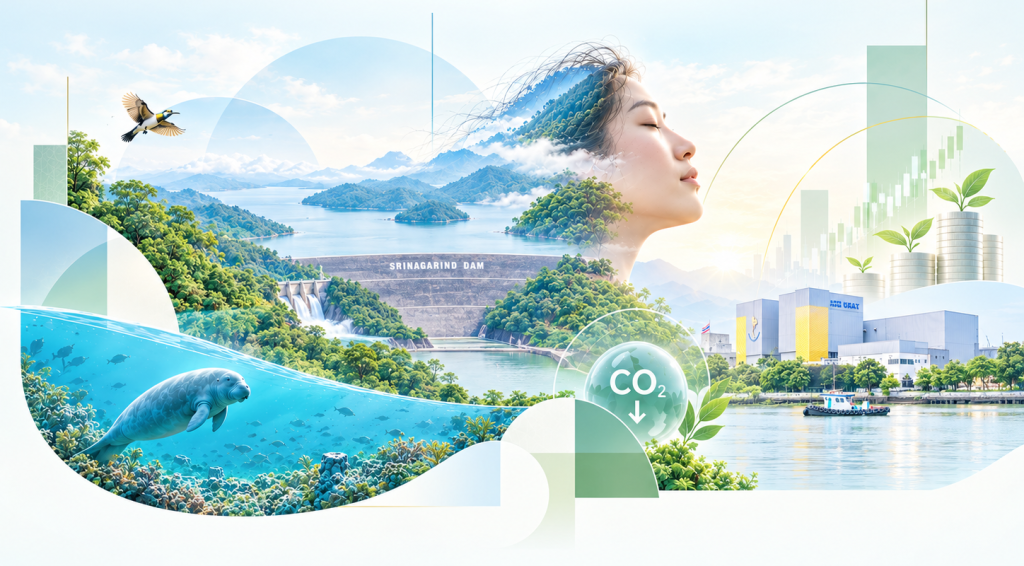
“Biodiversity,” Restoring Nature’s Balance, from Forests to the Underwater World
Biodiversity is essential to ecosystems and quality of life. Energy must therefore be developed with the balance between the use of natural resources and the conservation and restoration of nature. EGAT has continued its commitment to environmental stewardship around operating areas through assessing and monitoring environmental impacts and conducting surveys and developing databases on biodiversity, contributing to area-based conservation, impact prevention and mitigation, and ecosystem restoration. The results are evident in the conservation and presence of distinctive species across areas surrounding EGAT’s dams and power plants, including Irrawaddy Dolphin at the estuary of the Bang Pakong River, Chachoengsao Province; Oriental Pied Hornbills in Srinagarind Dam, Kanchanaburi Province; and dugongs near Krabi Power Plant, Krabi Province.
Meanwhile, EGAT continues to restore areas used for energy operations, such as Mae Moh Mine in Lampang Province, bringing them back to life through soil rehabilitation and tree planting. The restored area has become a tourist attraction in the province and a thriving habitat for little grebes and over 100 other bird species. From land to sea, EGAT has extended its conservation efforts through the “EGAT Fish Home Project.” The project repurposes decommissioned electrical insulators as artificial reefs and settlement substrates for coral larvae, creating habitats and nursery grounds for marine life. The project helps restore the richness of marine ecosystems and reaffirm EGAT’s commitment to advancing its energy mission while caring for nature, ensuring sustainable energy development coupled with environmental conservation.

“T-VER,” Transforming Carbon Reduction into Measurable Value
Another challenge of the energy sector is reducing greenhouse gas emissions to tackle climate change. EGAT is therefore driving its implementation through two main approaches: enhancing power generation efficiency through the application of appropriate technologies and participating in Thailand’s Voluntary Emission Reduction Program (T-VER). Since 2014, EGAT has continuously registered T-VER projects across various categories, including hydropower plant development, floating solar projects, the efficiency improvement project at Bang Pakong Combined Cycle Power Plant, and the Plant Genetic Conservation Project Under the Royal Initiative of Her Royal Highness Princess Maha Chakri Sirindhorn (RSPG).
Projects certified under the T-VER program can convert the amount of greenhouse gas emissions reduced or absorbed into “carbon credits,” which can then be linked through market mechanisms. This creates opportunities for businesses and organizations to participate in greenhouse gas emissions reduction and offsetting, generating environmental value and economic opportunities while fostering the growth of green businesses. It also helps make the transition to a low-carbon society more tangible and achievable.
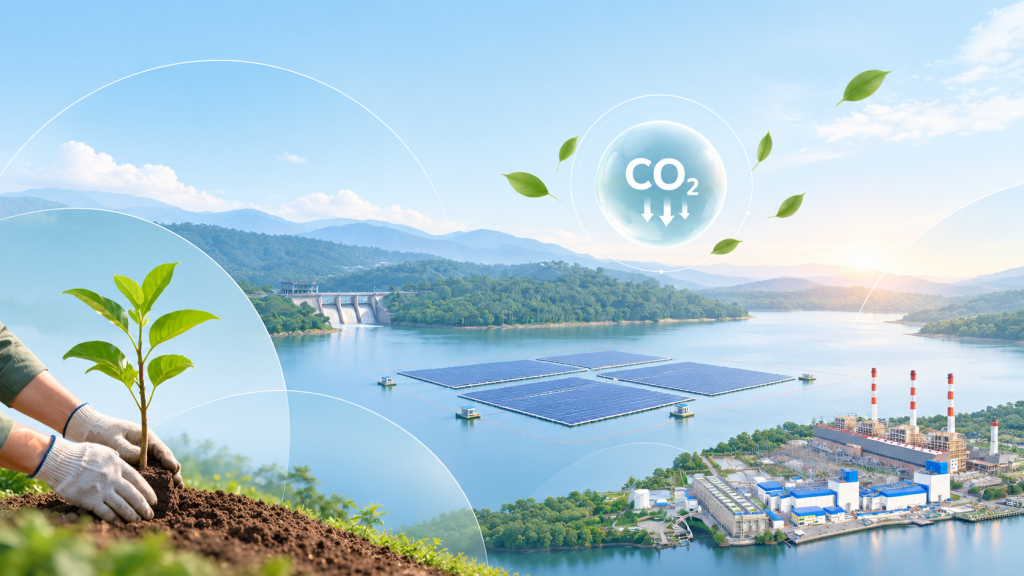
“SLB,” Connecting Green Goals with Finance
Driving sustainability for a continuous progress requires more than implementing environmental projects. It involves integrating sustainability goals into every aspect of organizational planning, investment, and management. In 2025, EGAT became the first state enterprise in Thailand that issued a Sustainability-Linked Bond (SLB), worth Baht 2 billion with a five-year maturity, linking its environmental performance to financial accountability.
In 2026, EGAT further built on this achievement by increasing the bond issuance amount to Baht 5 billion and setting more ambitious targets. These include reducing greenhouse gas emissions intensity per unit of electricity generated across Scope 1 (direct emissions) and Scope 2 (organizational energy consumption) by at least 30% by 2030, compared with the 2021 baseline. In case that the targets are achieved, the interest rate will be reduced; otherwise, the interest rate will be increased. This mechanism directly links environmental targets with financial accountability, encouraging the organizations to continuously plan, monitor, measure, and improve their performance with strong commitment. It also creates opportunities for the financial sector and investors to participate in driving an effective and sustainable energy transition.

Sustainable power generation goes beyond energy security and sufficiency. It entails creating a balance among energy, nature, the economy, and society. The initiatives include restoring biodiversity, from forests to marine ecosystems; reducing greenhouse gas emissions through carbon credit mechanisms and integrating environmental targets with financial mechanisms through the SLB. Each of these dimensions plays a vital role in turning sustainability from a concept into measurable outcomes and tangible value. Ultimately, energy development means using every resource, implementing every project, and making every investment responsibly to return value to nature, society, and Thailand, while laying the foundation for a secure and sustainable energy future for next generations.