
Every Minute Secured” with Three Thai Power Gears
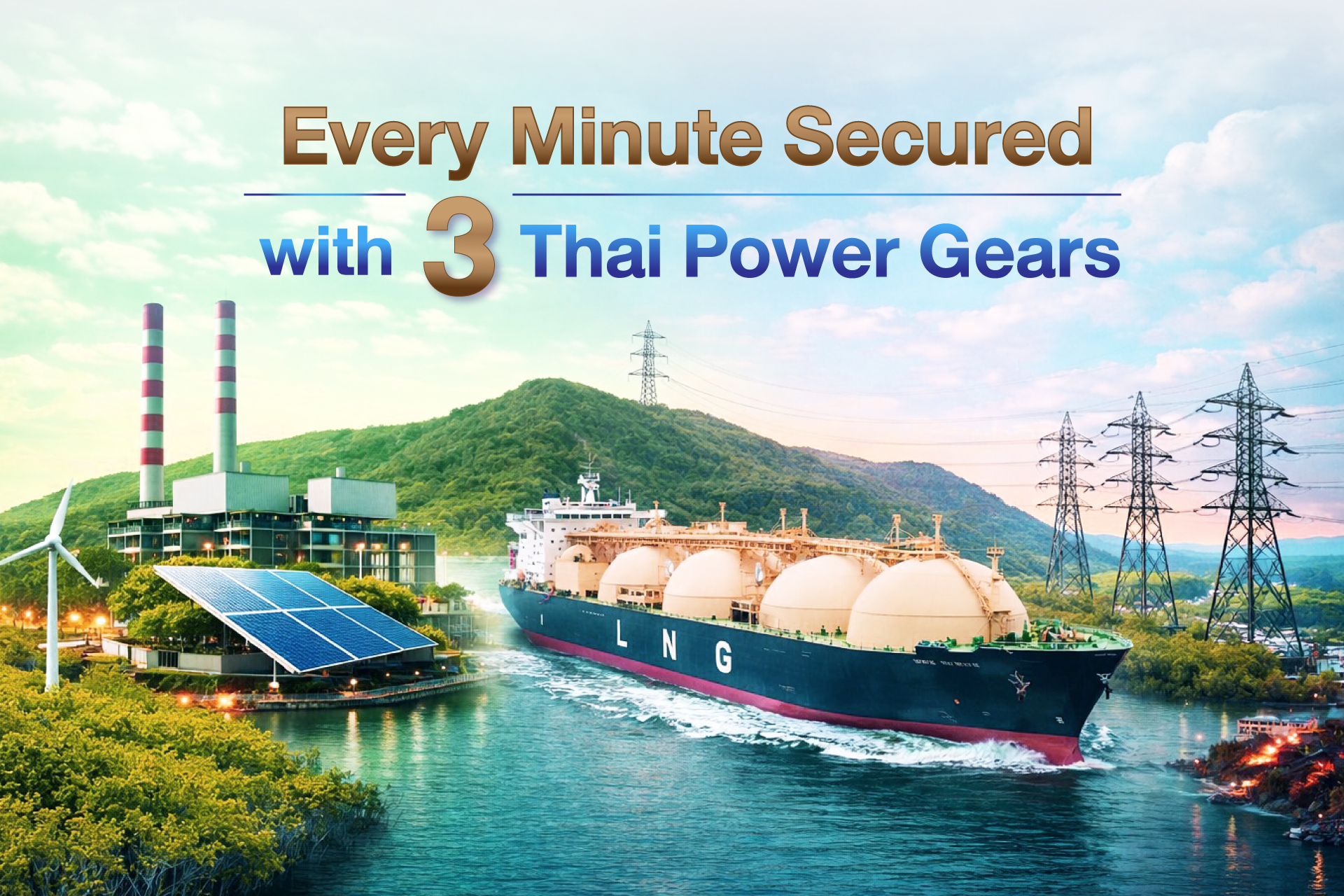
What does it take to keep the lights on around the clock? This question is often overlooked, even though electrical power is an essential source of energy that drives daily life, the economy, and industrial activities of the country. Power security is not a matter of coincidence. It results from the effective integration of three key components working together under the supervision of the Electricity Generating Authority of Thailand (EGAT), a main utility responsible for ensuring power system security.
“Power Plant,” the Heart of Never-Ending Power Generation


When there is continuous power demand, power plants, the first gear of power system, cannot cease operation, like the heart pumping blood throughout the body. EGAT has 40 non-stop operating power plants and dams across the country. Fossil-fueled power plants using natural gas or coal serve as primary power plants running 24/7. Renewable energy power plants, such as solar, wind, and hydropower, function as auxiliary power sources when conditions are suitable for generation, including sufficient sunlight, wind velocities, and water discharged downstream. EGAT balances the operations among diverse types of power plants for the power system’s security and adequate continuous power supply. Also, EGAT keeps maintaining its power plants using international technologies to ensure optimal operating efficiency and prevent any interruption that could affect the stability of the power system.
“Fuel” Management for Security in Every Situation
Electricity tariffs are partly driven by fuel costs of power generation. Fuel management, the second gear, covers not only fuel procurement but also risk management and planning to ensure continuity of fuel supply at reasonable prices.


Thailand uses a diversified range of fuels for power generation, such as “natural gas” as the main fuel, sourced from gas fields in the Gulf of Thailand, the Thai-Malaysia Joint Development Area (JDA-A18), and Myanmar. Imported liquefied natural gas (LNG) is an alternative to enhance power system security. As an LNG importer in Thailand, EGAT has imported LNG for use in its new power plants, contributing to lower fuel costs for power generation. EGAT plans to import LNG under long-term contracts to ensure the security in the long run with adequate fuel supply for main power plants at reasonable prices. Besides, the low-cost lignite from the Mae Moh Mine is utilized as fuel for power generation at Mae Moh Power Plant, mitigating electricity costs for the public, under comprehensive environmental measures.
Furthermore, EGAT is conducting clean fuel studies such as hydrogen, ammonia, and biomass to seek more energy alternatives and support the reduction of greenhouse gas emissions in the long term.
“Transmission System,” Power Lifeline Supplying Electricity for Energy Security of Thailand


Serving as the artery of the power system, the nationwide transmission system is the last power gear. Construction and maintenance of transmission system are required to supply electrical power from generation sources to users thoroughly and efficiently. At present, EGAT is responsible for a 40,000 circuit-kilometer transmission system of the country with 240 substations nationwide. In the meantime, EGAT is expanding the transmission system to meet economic growth and rising power demand, while modernizing the power grid. These technologies include the Renewable Energy Forecast Center (REFC), which forecasts power generation from renewable energy, and the Demand Response Control Center (DRCC), which enhances load management efficiency, enabling the National Control Center (NCC) to plan and dispatch power plants suitably.


These three power gears are closely integrated, especially in times of crisis. During the recent flooding in Hat Yai District, Songkhla Province, Chana Power Plant was temporarily shut down after floodwaters rose to more than four meters. The NCC responded by dispatching Krabi Power Plant and increasing the power generation of Khanom Power Plant in Nakhon Si Thammarat Province to compensate for the loss of generating capacity, thereby maintaining power system stability and supply adequacy in the South. This incident reflects the system’s readiness to handle all situations, while affirming the professionalism in managing the three power gears, “power plants, fuels, and the transmission system,” to operate in unison. This integration ensures supply adequacy for Thais, fosters confidence across the industrial sector, and supports stable economic growth.