
Rajjaprabha Dam
(Surat Thani Province)
Background
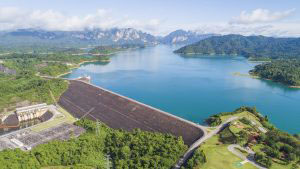
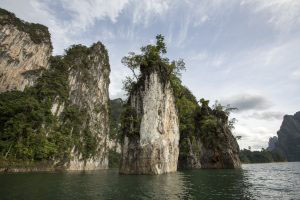
When thinking of clean and eco-friendly energy, hydropower is one of them. Dam construction is regarded as a water source development for storing and discharging water. One of EGAT’s dams, which is as outstanding, beautiful, and beneficial, is “Rajjaprabha Dam,” formerly known as “Chiew Lan Dam.” The scenery of its reservoir attracts many tourists to the dam, with its nicknam the “Guilin of Thailand.” It is EGAT’s latest construction of large dam.


Rajjaprabha Dam was constructed under the Water Source Development Project in the South. It helps strengthen the power system security and boost economic prosperity in line with the meaning of Rajjaprabha or “Light of the Kingdom.”
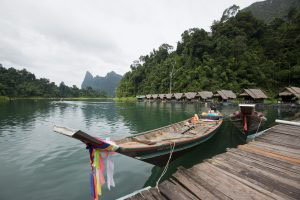
The dam provides benefits on irrigation for cultivation and flood relief in the rainy season. The water storage can reduce the severity of large amounts of water, dilute wastewater, and prevent saltwater intrusion at the mouth of the Ta Pi – Phum Duang Rivers in the dry season. Moreover, the reservoir serves as a freshwater fishery and a tourist attraction, generating income for the locals.
It is also part of the celebration of the 5th Cycle Birthday Anniversary of His Majesty King Bhumibol and the Ceremonial Rajamangala in 1987. The construction began on February 9, 1982 and was completed in September 1987. His Majesty King Bhumibol Adulyadej The Great, accompanied by Her Royal Highness Princess Maha Chakri Sirindhorn, performed the inauguration on September 30, 1987. At present, the power plant has a contracted generating capacity of 240 MW.
Characteristics of Dam

Type
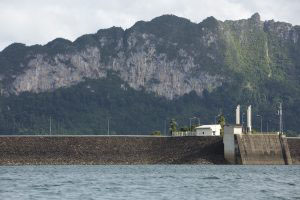
Rockfill dam with clay core
Reservoir storage capacity
5,639 million m3
Reservoir area
185 km2
Crest width
12 m
Crest length
761 m
Height
94 m

Characteristics of Power Plant

Structure
reinforced concrete
240 MW
Annual generated electricity
554 million kWh

Contact