
Sirikit Dam
(Uttaradit Province)
Background
The Nan River is an important river after the Ping River, one among the four tributaries that form the Chao Phraya River. In order to gain full results for agriculture in the Chao Phraya Central Plains, it is necessary to build the dam on the Nan River to reduce flood problems and increase water in the Chao Phraya River basin.


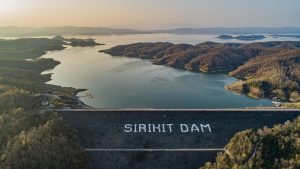
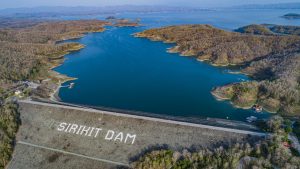
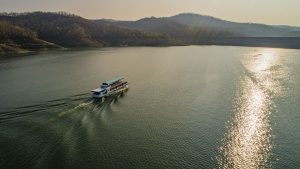
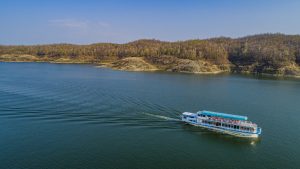
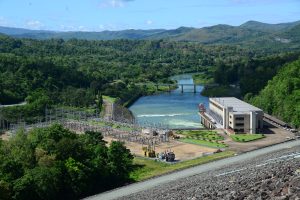
Sirikit Dam or formerly known as “Pha Som Dam” is the largest earth-fill dam in Thailand. It was built across the Nan River at Khao Pha Som, Pha Leud Sub-district, Tha Pla District, Uttaradit Province under the Nan River Basin Development Project of the Royal Irrigation Department. The construction started in 1968 and completed in 1972. Sirikit Dam helps to relieve flooding in Nan River basin and together with Bhumibol Dam relieves flooding in Chao Phraya Central Plains. With Sirikit Dam, there are irrigation areas in Nan River basin in the rainy season of 1,551,000 rai and in the dry season of 300,000 rai, and in the Chao Phraya Central Plains of 2,500,000 rai totaling 2,800,000 rai. When dredging and dressing some parts of the Nan River, it can be used for a transport route from Nakhon Sawan to Uttaradit all year round. The reservoir of Sirikit Dam serves as a fish breeding and a tourist spot. With the royal permission of His Majesty King Bhumibol Adulyadej The Great, the name of the dam was changed to Sirikit Dam after Her Majesty Queen Sirikit The Queen Mother.
On March 4, 1977, the opening ceremony of the dam was performed by Their Majesties King Bhumibol Adulyadej The Great and Queen Sirikit The Queen Mother accompanied by Her Royal Highness Princess Maha Chakri Sirindhorn.
Characteristics of the Dam

Type:
Clay core earth-fill dam
Reservoir capacity:
9,510 million m3
Reservoir area:
260 km2
Crest width:
12 m
Crest length:
810 m
Height:
113.60 m
Sirikit Dam is the largest earth-fill dam in the country. Its reservoir capacity ranks the third after Srinagarind Dam and Bhumibol Dam.

Characteristics of the Power Plant

Structure:
Reinforced concrete
500 MW
Approximate annual generated electricity:
1,000 million kWh

Contact