

Hydropower Battery: Future Alternative for Energy Security
24 April 2025In an era where climate change is a major global challenge, clean energy development is a promising alternative. In particular, Pumped Storage Hydropower Plant (PSH) can provide energy storage to support the power system during periods when other renewable energy sources, e.g., solar and wind, are unable to generate electricity. The PSH, therefore, can be conducive to enhancing the power system security, diminishing dependency on fossil fuel-based energy, and serving as a drive toward Carbon Neutrality in the future.
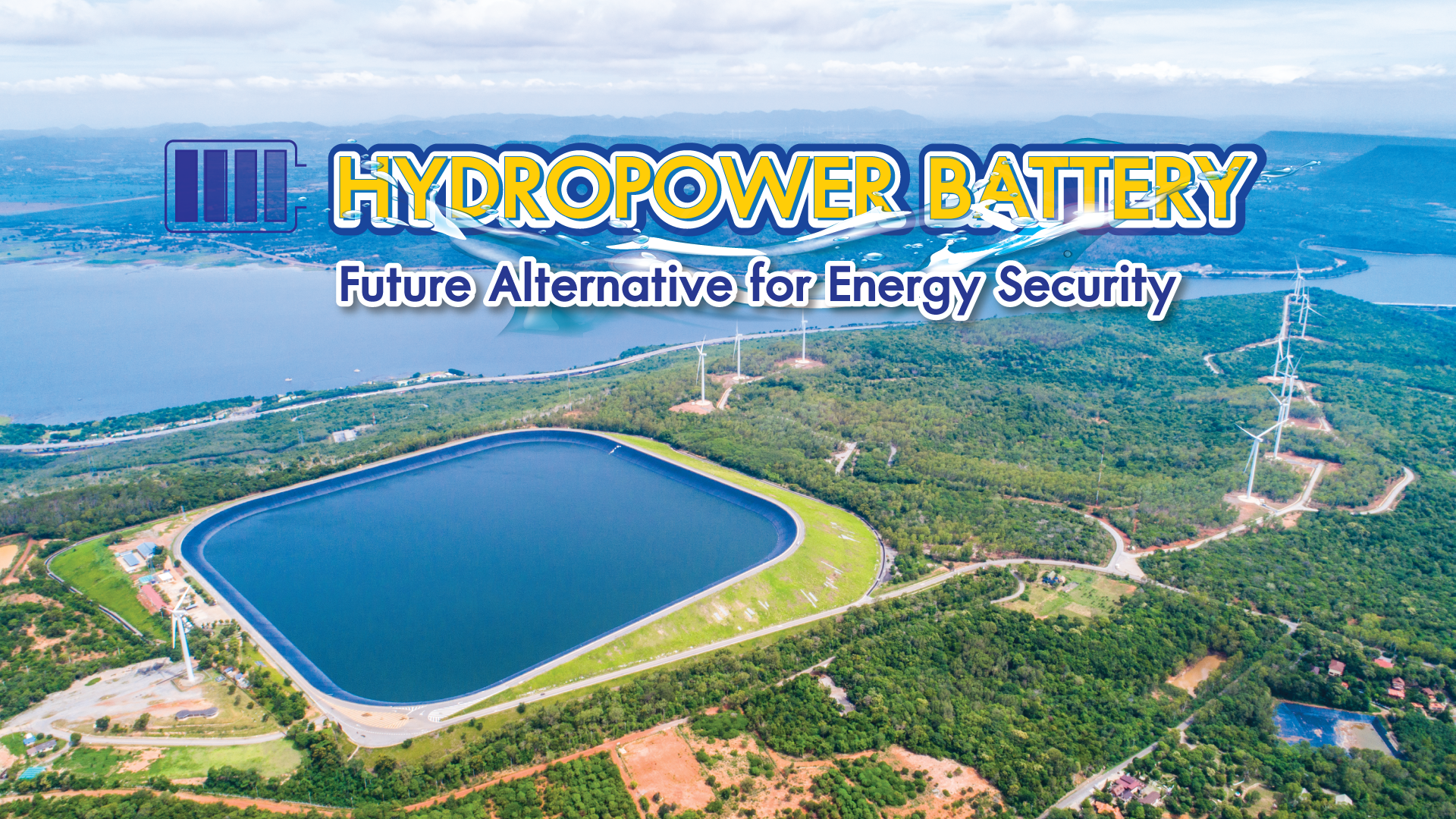
Hydropower Battery Delivering On-demand Clean Energy at All Times
The PSH acts like a “hydropower battery,” as it can store energy with hydropower using the principle of converting the potential energy of water into electric power. During low-demand periods, the water in the lower reservoir will be pumped up and stored in the upper reservoir. During high-demand periods or when renewable energy sources cannot generate electricity, the water will be released from the upper reservoir through water turbines for power generation. The PSH can supply electricity rapidly and effectively within five minutes, like a hydropower battery. The power plant can instantly generate a large amount of electricity whenever required by the power system. In addition, hydropower is considered a low-cost power generation source, thanks to the absence of fuel costs. It also does not cause pollution, making it eco-friendly.

Energy Storage System (ESS) Enhancing Power System Security
At present, Electricity Generating Authority of Thailand (EGAT) has developed three PSHs at Srinagarind Dam in Kanchanaburi, Bhumibol Dam in Tak Province, and Lamtakong Jolabha Vadhana Power Plant in Nakhon Ratchasima Province with generating capacities of 360 MW, 171 MW, and 1,000 MW, respectively. EGAT also plans to develop more PSHs in accordance with Thailand’s new Power Development Plan, including the 801 MW PSH at Chulabhorn Dam in Chaiyaphum Province, with a Scheduled Commercial Operation Date (SCOD) in 2034, which is currently in the process of project approval from the Cabinet. Moreover, EGAT is conducting feasibility studies (FS) of two PSHs at Vajiralongkorn Dam in Kanchanaburi with a generating capacity of 891 MW and an SCOD in 2036 and at Kathun Dam in Nakhon Si Thammarat Province with a generating capacity of 780 MW and an SCOD in 2037. Besides, there will be a project of storage capacity expansion for the upper reservoir of Lamtakong Jolabha Vadhana Power Plant which is now in the process of site allocation and conducting the Environmental Impact Assessment (EIA). This project aims to serve as an energy storage system to ensure the security of the country’s power system and support the transition toward rising renewable energy in the future.
Thailand is facing a critical energy challenge – energy management to ensure security during the transition from fossil-based energy to clean energy. With the fluctuation of renewable energy as a major pain point, the PSH is, therefore, one of the key solutions to enhance the secure transition, support the country’s goal of Carbon Neutrality, create a low-carbon society, and promote energy sustainability for a better world.