

REFC: A Game-Changing Technology for Balancing Energy Security and Affordability
23 June 2026
Did you know that 50-60% of electricity costs come from “fuel?” This is why electricity prices tend to rise whenever an energy crisis occurs. Thailand currently relies on imported liquefied natural gas, or LNG, for up to 25% of its electricity generation. Therefore, the Thailand Power Development Plan (PDP) aims to increase the share of renewable energy, not only to support the country’s Net Zero Emissions goal, but also to cut down on importing fuels. However, renewable energy also comes with inherent intermittency.
Being responsible for Thailand’s power system security, the Electricity Generating Authority of Thailand (EGAT) has developed energy innovations to support the efficient integration of renewable energy generation with fossil fuel power plants through the Renewable Energy Forecast Center (REFC). The Center provides accurate forecasts of renewable energy generation, helping ensure that Thai people have access to reliable electricity without interruption. The REFC promotes clean energy as an energy source for the world while managing energy cost fluctuations.

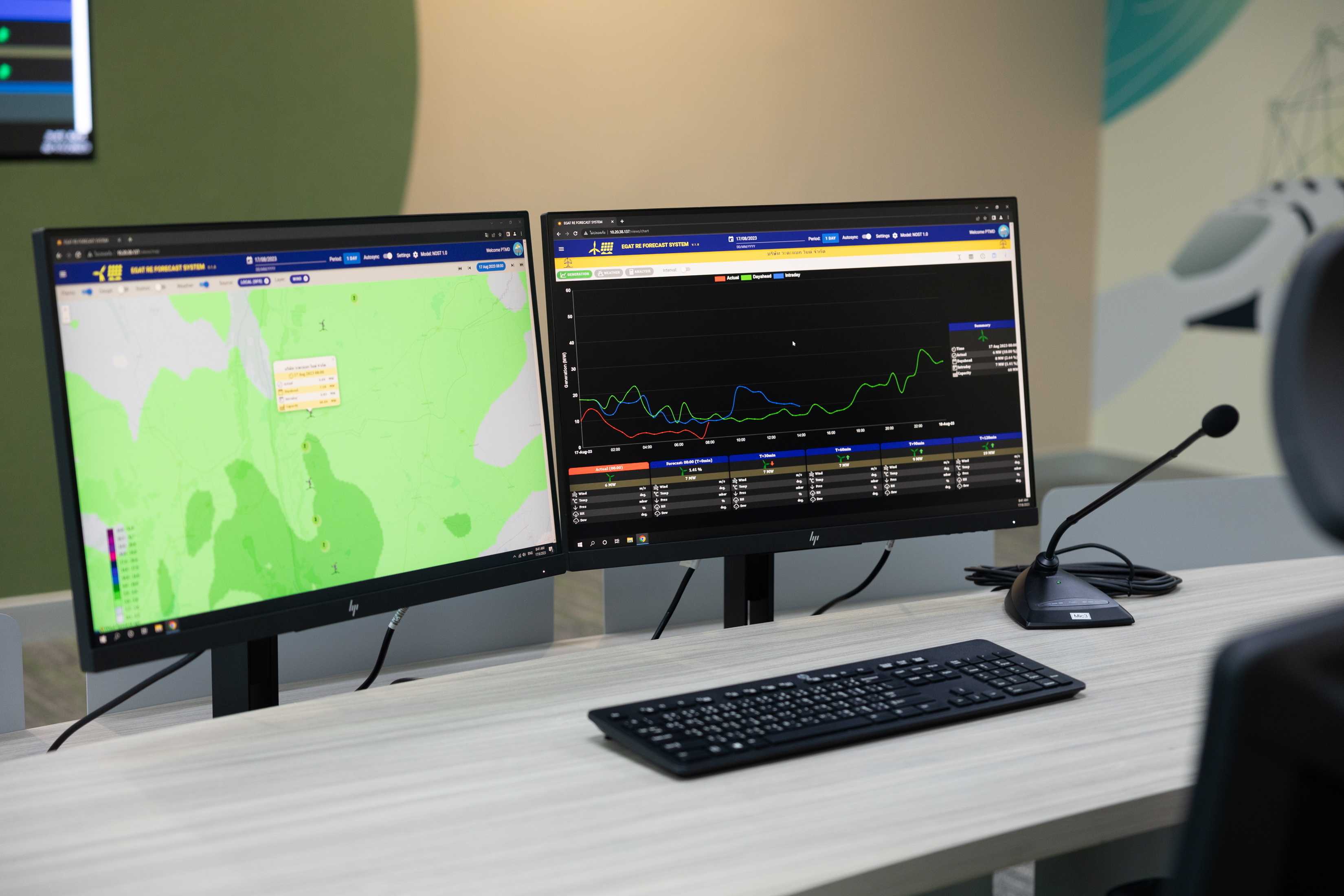
Anticipating Every Scenario and Overcoming Renewable Energy Variability
A major pain point of renewable energy is its variability. To overcome this weakness, it is necessary to forecast how much electricity renewable energy can generate and when that generation will occur. The REFC forecasts the output of solar and wind power plants owned by Small Power Producers (SPPs) that have power purchase agreements with EGAT. By analyzing weather conditions, power plant technical data, and historical generation records through an intelligent analytics system, the Center delivers accurate forecasts of renewable energy generation.


There are two types of forecasting. Day Ahead Forecasting provides forecasts once a day for up to 10 days in advance and is used to plan electricity generation alongside other types of power plants. Intraday Forecasting is updated hourly and provides forecasts up to six hours ahead, delivering the most accurate generation output estimates. The accuracy of the REFC enables the System Operator (SO) to manage power plant operations more effectively, reducing the risk of under-generation and over-generation and maintaining the balance between generation capacity and electricity demand to ensure a stable and secure power system.
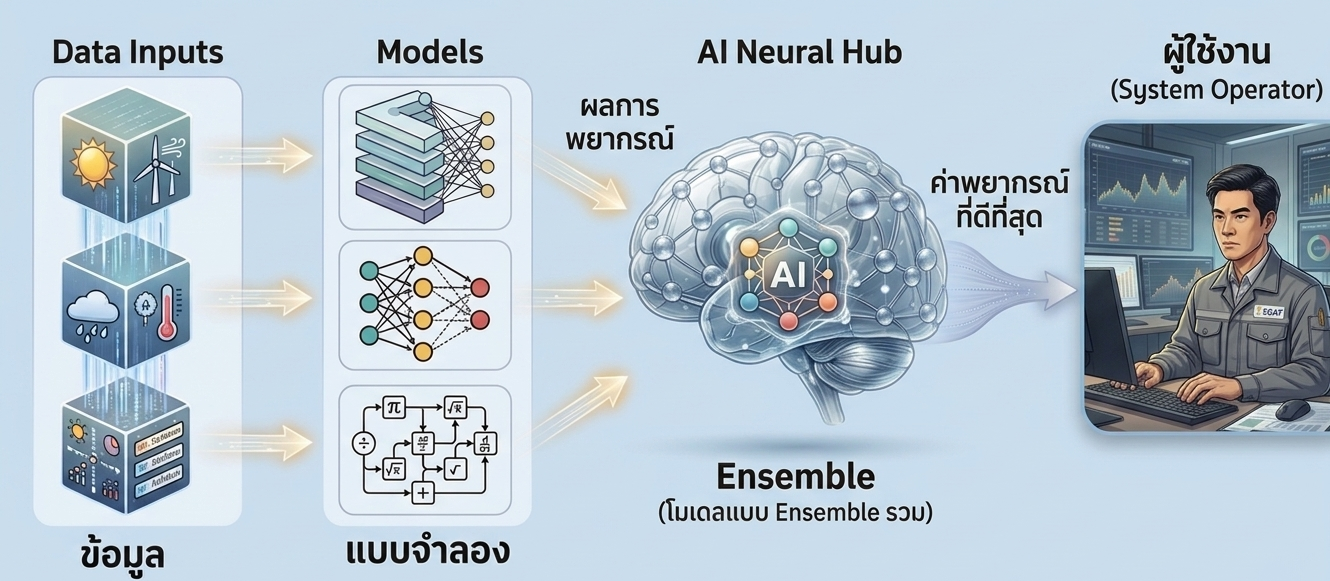
Greater Accuracy through AI Innovation
EGAT continues to advance its forecasting system through the implementation of the “Ensemble Forecasting” system, which systematically combines multiple forecasting models. Similar to having many experts working together, the system helps improve forecasting accuracy and reduce the Mean Absolute Percentage Error (MAPE), making predictions more reliable than those generated by a single model. Currently, the Ensemble Forecasting system has been deployed at 20 power plants, with an additional 18 power plants under development to support the growing share of renewable energy. REFC is an energy innovation developed by EGAT to strengthen the country’s energy technology capabilities while establishing critical infrastructure that supports a secure and sustainable energy transition.

Managing Energy Costs for Fair and Reasonable Electricity Prices
With a more accurate forecasting system, EGAT is able to manage the power system more efficiently. By predicting how much electricity renewable energy can generate during each period, the SO can dispatch baseload power plants in line with renewable energy availability. This enables more efficient fuel management, helping control fuel costs for electricity generation without maintaining excessive fuel reserves. It also mitigates the impact of fluctuations in global fuel prices, a key factor in determining the Fuel Adjustment Charge (Ft), thereby helping prevent sharp increases in electricity prices. Ultimately, the public benefits from a high-quality, reliable electricity service at a fair price.
As renewable energy continues to play an increasingly important role, forecasting technology has become the heart of modern power system management. It supports Thailand’s transition toward clean energy in a secure and efficient manner while ensuring a sustainable balance among energy security, electricity costs, and the quality of life of the Thai people.