

SMRs: Energy Security in Uncertain World
23 July 2026
As the global transition toward Net Zero Emissions accelerates, maintaining energy security has become more challenging than ever before. This is because while renewable energy is the key to a clean energy future, its power generation still depends on weather conditions. Small Modular Reactors (SMRs) are a promising clean energy technology that can enhance energy security. In addition to provide secure and continuous power generation, SMRs have an advantage in “fuel” supply by reducing fluctuations from external factors and creating long-term national energy independence.
Powering around the Clock, in any Weather
SMRs are designed with advanced safety features and can serve as a baseload power plant by providing continuous electricity generation around the clock. Operating without greenhouse gas emissions, SMRs generate reliable, clean energy despite weather variability. In an era increasingly shaped by AI, data centers, and electric vehicles (EV), the demand for electricity continues to rise continuously. Secure energy infrastructure powered by SMRs will strengthen confidence in Thailand’s power system supporting future industries while enhancing economic competitiveness.
Energy Independence with Stable Fuel Costs
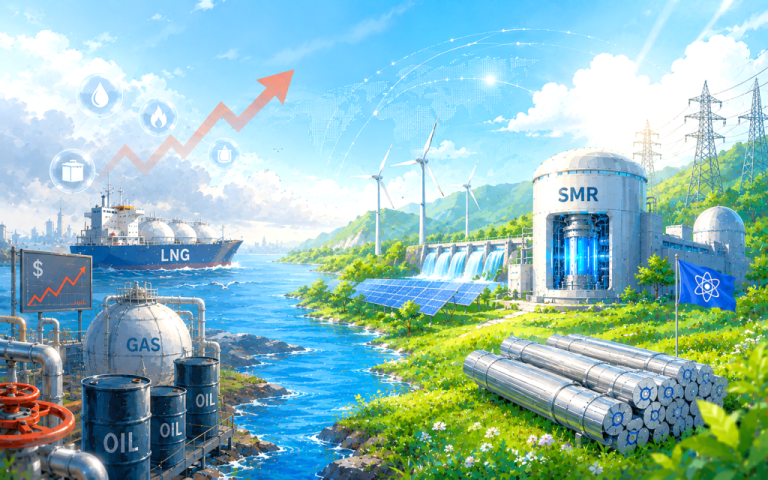
Amid rising geopolitical tensions, particularly in the Middle East, global energy prices have become increasingly volatile. The sharp increases in crude oil and natural gas prices have created a domino effect for countries that depend on fuel imports, including Thailand, where natural gas is the primary fuel used for power generation. Since domestic natural gas production from the Gulf of Thailand cannot adequately meet the demand, Thailand is required to import Liquefied Natural Gas (LNG). Thus, when global fuel prices surge, electricity costs increase.
SMRs are powered by uranium, a highly energy-dense fuel. As a result, even a small quantity can produce a large amount of electricity. For instance, a 300 MW SMR requires only 9-12 tons of fuel per year and can operate continuously for up to two years on a single fuel load. In contrast, a natural gas-fired power plant consumes hundreds of thousands of tons of fuel and requires continuous fuel feeding. The use of a small amount of uranium not only minimizes transportation and storage requirements but also reduces supply chain risks, which became a challenge for many countries during the energy crisis.
Moreover, nuclear fuel can be purchased and stored for many years in advance. With uranium available from diverse sources across regions worldwide, the risk of fuel supply is mitigated. These advantages of SMRs contribute to stable fuel costs, supporting long-term electricity cost management while enhancing national energy resilience and security.
SMRs, New Opportunity for Thai Energy Security
For Thailand, the development of SMRs will provide an opportunity to strengthen long-term energy security by reducing its reliance on LNG, an energy source with volatile prices. Even after being incorporated into the Power Development Plan (PDP), SMR development cannot be completed within a short period. It typically requires approximately 13 years for feasibility assessments, infrastructure development, and construction. At present, the Electricity Generating Authority of Thailand (EGAT) has been conducting studies and preparations covering technologies, site feasibility, workforce development, knowledge sharing, and public engagement. These efforts are at the heart of the future development of SMRs, enabling all stakeholders to work together in designing a secure and safe energy.
In a world facing complexity from geopolitical, economic, and energy challenges, SMRs, as a clean energy baseload power source, will play a significant role in ensuring energy security, reducing fuel import volatility, and filling the gap caused by limitations of renewable energy. Accelerating SMR development, in line with international safety standards, will be a crucial step toward strengthening Thailand’s economic growth, achieving Net Zero Emissions, and fostering a sustainable, balanced energy that provides certainty for Thais amid global uncertainties.